
Editorial
Quetta’s Cultural Moment: When Calligraphy Speaks for Balochistan
The announcement of an international-level calligraphy exhibition in Quetta is much more than the scheduling of a cultural event. It is an opportunity for Balochistan to speak to Pakistan and the wider world in a language that transcends politics, geography and stereotypes—the language of art.
Balochistan has often been portrayed through the narrow lenses of security challenges, political tensions, underdevelopment and geographical remoteness. These realities cannot simply be ignored, but neither can they define an entire province or its people. Behind the headlines lies a society with a rich cultural heritage, a proud history, remarkable artistic traditions and a young generation eager to participate in a more positive and progressive future.
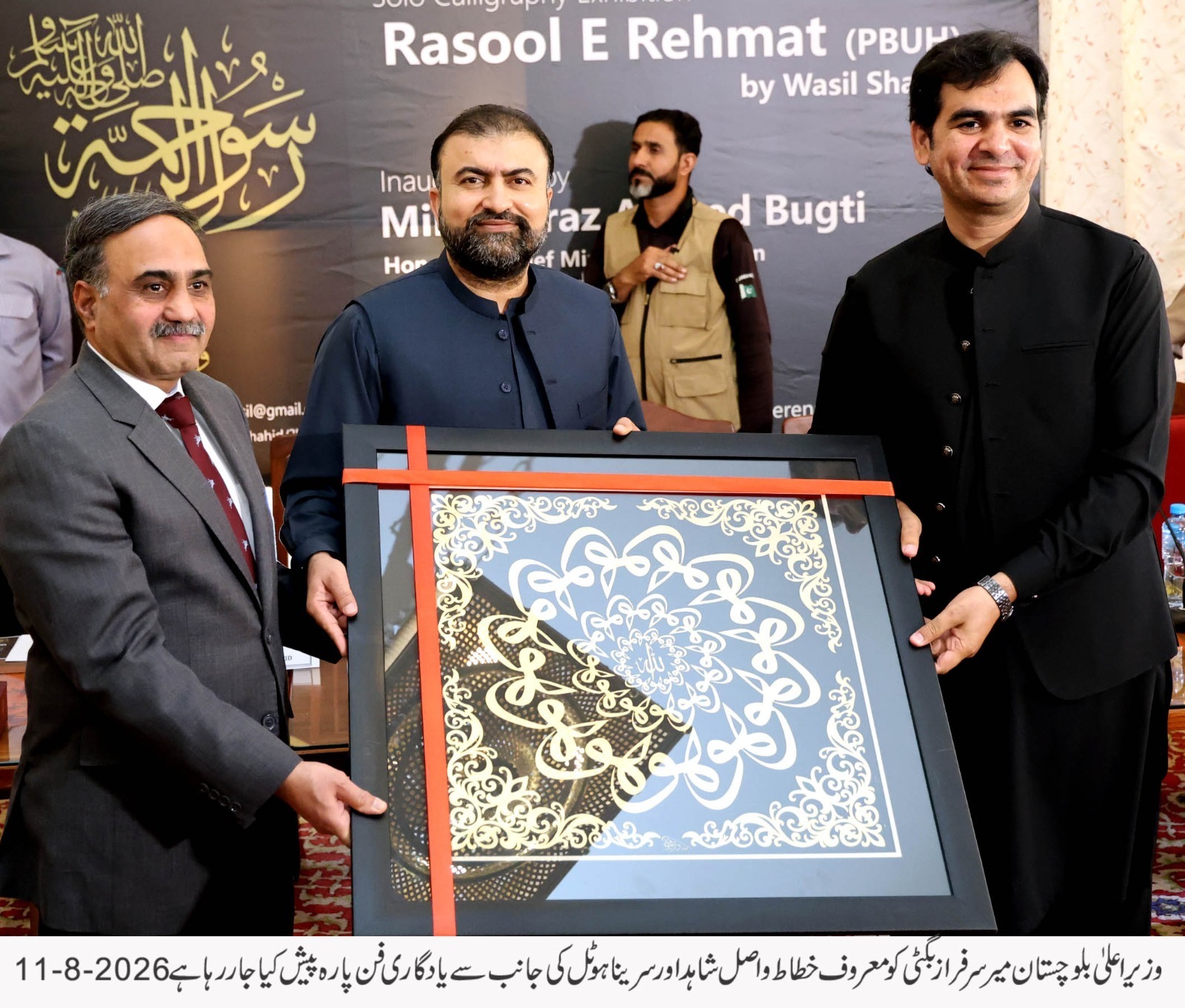
The proposed calligraphy exhibition in Quetta, announced by Chief Minister Mir Sarfraz Bugti, therefore deserves to be viewed as an important cultural initiative. Its significance lies not only in the beauty of calligraphy but in the message that such an event can communicate: Balochistan has the capacity to host high-quality international cultural activities and to present itself as a place of creativity, hospitality, peace and intellectual engagement.
Calligraphy occupies a special position in the cultural heritage of the Muslim world. The written word has historically been treated not merely as a means of communication but as an art capable of expressing spirituality, discipline and beauty. Islamic calligraphy, in particular, has connected generations through a shared appreciation of language, faith and artistic excellence.
Bringing this tradition to the centre of a major international event in Quetta can create a meaningful cultural bridge. Artists from different regions and countries can come together, exchange ideas and showcase their skills. For local artists and young students, such interaction can provide exposure to new techniques, contemporary approaches and international standards.
But the most important aspect of the initiative may be its potential to change perceptions.
For decades, the image of Balochistan in the national conversation has frequently been dominated by negative news. A cultural event cannot erase complex challenges overnight, nor should culture be presented as a substitute for addressing legitimate development and governance issues. However, culture can add another, equally important dimension to the narrative.
When visitors arrive in Quetta for an international exhibition, they will not simply see an exhibition hall. They will experience a city, meet its people and encounter its hospitality. They will have an opportunity to discover a side of Balochistan that is rarely visible in conventional news coverage.
This is where culture becomes a form of soft diplomacy.
A successful international exhibition can create connections that formal meetings and official statements sometimes cannot. Art creates conversation without confrontation. It allows people from different backgrounds to find common ground. In this sense, calligraphy can become an ambassador for Balochistan.
The timing of the initiative also offers an important opportunity. Cultural activities associated with Pakistan’s national celebrations can reinforce the idea that Balochistan is an integral and vibrant part of the country’s cultural and national identity. The message should not be merely that an event is being held in Quetta, but that Quetta itself is capable of becoming a destination for national and international cultural gatherings.
The government should therefore view this exhibition as the beginning of a broader cultural strategy rather than a one-time event. Quetta has the potential to host literary festivals, art exhibitions, heritage conferences, cultural exchanges, photography events and youth-focused creative programmes. Such activities can contribute to the city’s social and economic life while providing young people with constructive opportunities.
There is also an economic dimension that deserves attention. Cultural tourism can support hotels, restaurants, transport services, local artisans, artists, media professionals and small businesses. A well-organised international event can generate economic activity while strengthening the city’s reputation.
Yet expectations must be matched by execution. An international-level exhibition requires professional planning, quality curation, proper security, effective communication, suitable venues and meaningful participation from renowned artists. Local talent should not be treated merely as an audience; it should be placed at the heart of the initiative.
The proposed exhibition can also become an opportunity to document and promote Balochistan’s own artistic traditions. Local crafts, calligraphic styles, manuscripts, literature and cultural heritage could be incorporated into the wider programme, allowing international guests to see that Balochistan is not simply hosting culture—it possesses a culture of its own.
The true success of the initiative will ultimately be measured not by the number of banners displayed or speeches delivered, but by the lasting impression it leaves behind.
Quetta needs more moments in which its identity is defined by creativity rather than crisis, by hospitality rather than headlines, and by culture rather than conflict. The proposed calligraphy exhibition can become one such moment.
When the first calligrapher puts pen to paper in Quetta, the resulting artwork will be more than ink on a page. It can become a message from Balochistan: a message of peace, confidence, cultural pride and openness.
And perhaps that is the most powerful role of art—to allow a place to tell its own story.