
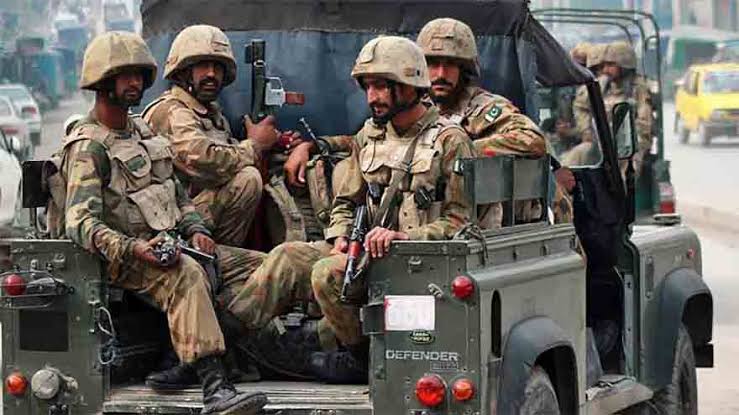
Operation Shaban: A Decisive Response to Terrorism
By Uzma Yaqoob
The recent counter-terrorism operations in Balochistan, particularly Operation Shaban, reflect the continued determination of Pakistan’s security forces to confront terrorist networks and protect civilian communities. The operations in Shaban, Nushki and Mand have once again highlighted the importance of intelligence-based action, operational preparedness and coordinated efforts against armed groups seeking to disrupt peace in the province.
According to the Inter-Services Public Relations (ISPR), security forces launched operations in the general area of Shaban, District Quetta, after intelligence agencies identified terrorist hideouts posing a threat to the local population. The operation began on September 21, 2026, and was subsequently intensified as security forces moved to clear the affected areas.
During Operation Shaban, several terrorist hideouts were cleared. The ISPR reported that 33 terrorists had been killed during the operation, while 23 terrorists were eliminated during intensified operations over a period of 72 hours. Weapons, ammunition and explosives were also recovered from the cleared locations.
Separate intelligence-based operations in Nushki and Mand further demonstrated the operational reach of the security forces. On September 25, 11 terrorists were killed in Nushki, while six terrorists were neutralised in Mand. According to the ISPR, more than 71 terrorists had been killed in Operation Shaban and other areas of Balochistan over a period of 96 hours.
Beyond the numbers, such operations carry a significant security dimension for local communities. Clearing terrorist hideouts reduces the immediate threat to civilians and creates space for normal social and economic activity. For Balochistan, where vast geographical distances and difficult terrain present additional security challenges, sustained intelligence gathering and timely operations remain particularly important.
The broader counter-terrorism effort is being pursued under the national vision of “Azm-e-Istehkam,” approved by the Federal Apex Committee under the National Action Plan. Its objective is to strengthen the collective response against terrorism through the coordinated efforts of security forces, intelligence agencies, law-enforcement institutions and other relevant state bodies.
The people of Balochistan have a fundamental stake in the restoration and preservation of peace. Security is essential for education, healthcare, investment, employment, infrastructure development and the delivery of public services. Every reduction in the space available to terrorist groups contributes to creating an environment in which these sectors can function more effectively.
At the same time, military and intelligence operations are only one component of a sustainable peace strategy. Long-term stability also requires effective governance, access to justice, economic opportunities, quality education and continued engagement with local communities. These measures can strengthen public confidence and reduce the space in which violent groups attempt to operate.
Operation Shaban therefore represents not merely a series of tactical engagements, but part of a broader effort to protect communities and preserve the province’s path towards stability. The continued commitment of security and law-enforcement institutions, combined with effective governance and public cooperation, remains essential to ensuring that the gains achieved through counter-terrorism operations translate into lasting peace across Balochistan.