
Editorial
Merit Must Become the Foundation of Balochistan’s Public Institutions
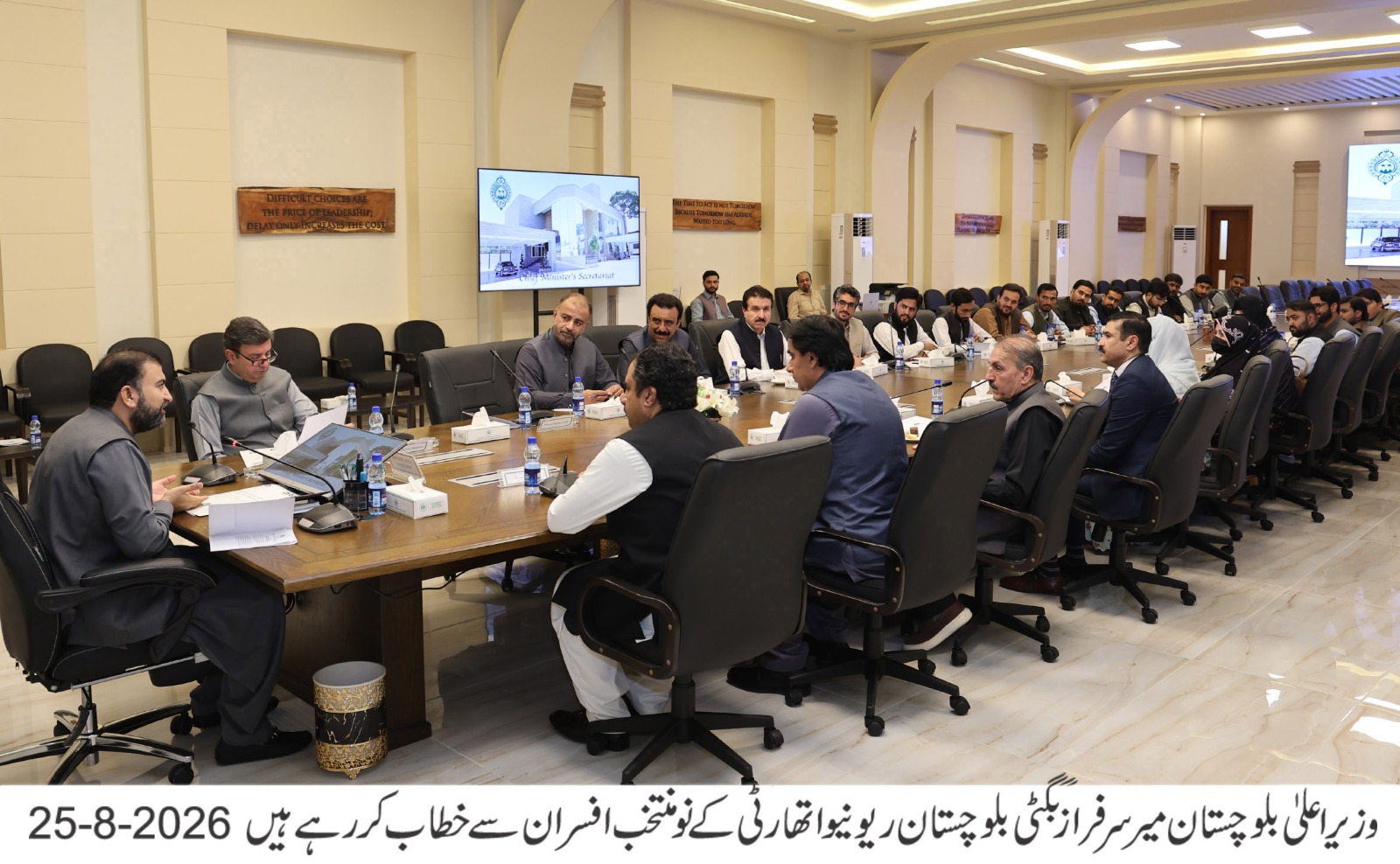
The completion of the merit-based recruitment of 19 officers for the Balochistan Revenue Authority through the Higher Education Commission is more than an administrative development. It is a test of whether merit, transparency and institutional professionalism can become permanent features of governance in Balochistan.
The decision to appoint officers through a transparent and merit-based process deserves recognition because public institutions are ultimately only as strong as the people entrusted with their responsibilities. When appointments are based on competence rather than connections, institutions become more credible, decisions become more professional and citizens are more likely to trust the state.
Chief Minister Balochistan Mir Sarfraz Bugti’s statement that no candidate from his own district, Dera Bugti, was selected is particularly significant. Regardless of political considerations, this is the kind of example that can give practical meaning to the principle of merit. If a government is willing to accept the outcome of a transparent selection process even when candidates from its own political constituency do not succeed, it sends a powerful message that public employment should not be treated as a political favour.
The importance of the Balochistan Revenue Authority cannot be overstated. Balochistan has enormous economic potential, but its ability to translate that potential into sustainable development depends heavily on the strength of its financial institutions. A province cannot rely indefinitely on external financial assistance or federal transfers. It must gradually strengthen its own revenue-generating capacity.
This is where the Revenue Authority has a crucial role to play.
A stronger revenue system does not simply mean collecting more taxes. It means widening the tax base, improving compliance, reducing leakages, using technology, simplifying procedures and creating an environment in which taxpayers are treated fairly. Revenue collection must be efficient but also transparent and predictable. Businesses and citizens are more willing to comply when they believe the system is impartial and the money collected is ultimately used for public welfare.
Balochistan’s financial challenges make this reform even more urgent. A significant share of provincial resources is consumed by non-development expenditure, leaving limited fiscal space for education, healthcare, infrastructure and social protection. Every rupee saved through better financial management and every rupee generated through improved revenue collection can potentially create additional space for development.
However, institutional reform cannot end with recruitment. The 19 newly appointed officers must now be given clear performance targets, professional training and the institutional independence required to perform their duties. Their success should be measured through tangible outcomes rather than merely through attendance, files processed or routine administrative activity.
The government should also establish a culture of accountability alongside merit. Merit in recruitment must be followed by merit in performance, promotion and evaluation. An officer appointed on merit should know that future professional growth will depend on performance, integrity and results.
Equally important is the inclusion of talented women among the newly selected officers. Balochistan cannot afford to leave half of its human capital underutilised. Qualified women must be provided equal opportunities in public administration, revenue management and economic decision-making. Their participation can strengthen institutions and broaden the province’s professional talent pool.
There is also a deeper social dimension to meritocracy. In societies where young people believe that opportunities are distributed through influence rather than ability, frustration and alienation inevitably grow. Merit can help rebuild the relationship between young citizens and the state. When a qualified young person receives a government position because of ability and hard work, it creates a powerful example for thousands of others.
This is why merit should not be treated as a slogan or an occasional administrative exercise. It must become a governing principle.
The government’s reported recruitment of more than 14,500 teachers on merit is another step in this direction. But the real challenge is consistency. Merit must be applied across every department, every recruitment process and every level of government. Selective merit is not enough; institutionalised merit is what produces lasting change.
The newly appointed officers of the Balochistan Revenue Authority therefore carry a responsibility much greater than their individual positions. They have an opportunity to demonstrate that professional competence, integrity and commitment can transform a public institution.
For the provincial government, the task is equally important: protect the recruitment process from political interference, provide institutions with professional leadership, enforce accountability and ensure that performance remains the ultimate measure of success.
Balochistan needs stronger institutions, not merely larger administrative structures. It needs a public sector that can generate resources, deliver services and inspire confidence.
The appointment of 19 officers is only a beginning. Its true significance will be determined by what these officers achieve—and whether the principle of merit established today becomes the standard for governance tomorrow.
Merit must not be an exception in Balochistan. It must become the rule.