
EDITORIAL
Improving Governance in Balochistan
Good governance is the foundation upon which sustainable development, public trust and institutional stability are built. For Balochistan, the importance of effective governance is even greater. The province’s vast geography, dispersed population, infrastructure gaps and longstanding administrative challenges require a governance model that is responsive, accountable and capable of delivering results at the grassroots level.
In recent years, the debate on Balochistan’s development has increasingly moved beyond the question of how much money is allocated to the province. The more important question is how effectively public resources are managed and how quickly their benefits reach ordinary citizens. This shift from expenditure to outcomes represents an important change in the way governance should be understood.
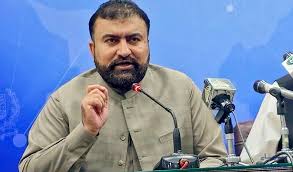
Under Chief Minister Mir Sarfraz Bugti, the provincial government has placed greater emphasis on administrative reforms, institutional performance, digitalisation and improved public service delivery. These priorities are important because development cannot be sustained through infrastructure projects alone. Strong institutions and an efficient administrative system are equally essential for translating government policies into meaningful improvements in people’s lives.
The proposed Balochistan Citizen Facilitation and Good Governance Bill, 2026, is significant in this context. Its emphasis on citizen facilitation, grievance redressal, inter-departmental coordination, performance-based accountability and evidence-based decision-making reflects a broader understanding of modern governance. The state must not only formulate policies; it must also create mechanisms through which citizens can easily access services and seek timely solutions to their problems.
For an ordinary citizen, good governance is experienced at the district office, hospital, school, municipal authority, police station and other public institutions. A government may announce ambitious policies, but their credibility ultimately depends on what happens when a citizen needs a service. Delays, unnecessary procedures and lack of coordination can weaken public confidence even when resources are available.
This is why administrative reform must focus on simplifying procedures and making institutions more responsive. Technology can play an important role in this process. Digital services can reduce unnecessary interaction, improve record management, increase transparency and enable citizens to track applications and complaints. Recent digital initiatives in provincial institutions demonstrate the potential of technology to modernise traditional systems and improve accountability.
However, digitalisation alone cannot solve governance problems. Technology must be accompanied by institutional ownership, trained personnel and clear accountability. A digital system is only as effective as the officials responsible for operating it and responding to the citizens who use it.
District administration also deserves particular attention. In a province as geographically extensive as Balochistan, the effectiveness of governance depends heavily on the capacity of district-level institutions. Provincial policies must therefore be translated into practical mechanisms at the district and local levels. Better coordination between provincial departments, district administrations and local authorities can significantly improve service delivery.
Human development should remain at the heart of this governance agenda. Education, technical training, healthcare and employment opportunities are not merely social-sector responsibilities; they are essential components of economic development. Balochistan’s young population represents a major opportunity, provided that young people are equipped with relevant skills and connected to productive opportunities.
The same principle applies to women’s economic participation. Expanding access to education, entrepreneurship, skills development and financial opportunities can strengthen household incomes and contribute to a more inclusive provincial economy. Governance should therefore be assessed not only by administrative efficiency but also by its ability to create opportunities for those who have historically remained on the margins of economic activity.
The management of Balochistan’s natural resources also requires a governance framework based on transparency, institutional capacity and public interest. The province possesses enormous mineral, agricultural and coastal potential. Yet resources can contribute to sustainable prosperity only when their development is accompanied by clear rules, responsible investment, environmental safeguards and meaningful economic opportunities for local communities.
Another essential element is performance-based accountability. Accountability should not be reduced to punitive action after problems emerge. It should be built into the administrative system through clear responsibilities, measurable targets and regular evaluation. Officials who perform well should be recognised, while persistent inefficiency should have institutional consequences.
Parliamentary oversight can further strengthen this process. The scrutiny of legislation such as the Citizen Facilitation and Good Governance Bill provides an opportunity to examine whether proposed reforms are practical, enforceable and suited to the province’s particular circumstances. Effective legislation emerges through consultation, constructive criticism and careful consideration of implementation challenges.
The task ahead is substantial. Balochistan cannot overcome decades of institutional and developmental challenges overnight. But meaningful change does not necessarily begin with dramatic measures. It begins with functioning institutions, clear responsibilities, responsive officials, transparent procedures and a consistent commitment to public service.
The real test of governance is ultimately simple: whether citizens experience a government that listens, responds and delivers. If administrative reforms are implemented with continuity and political commitment, Balochistan can gradually build a governance system that is more efficient, transparent and citizen-centred.
The province does not merely need more government activity. It needs better government. The future of Balochistan will depend not only on the resources it possesses, but on the quality of institutions entrusted with turning those resources into opportunity, dignity and a better quality of life for its people.