
Editorial
Good Governance: The Foundation of Sustainable Development in Balochistan
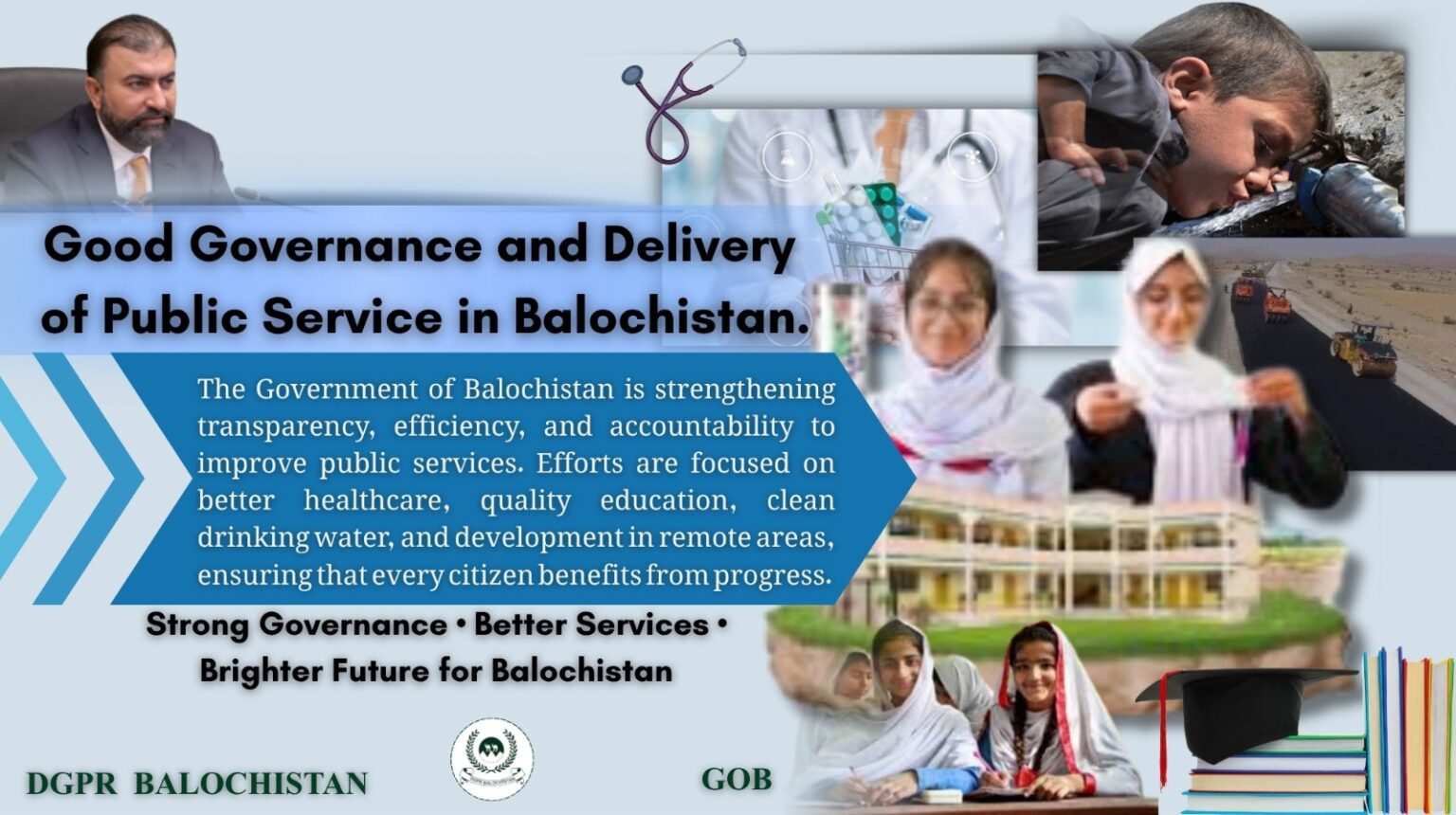
Good governance is the foundation upon which sustainable development, public trust and institutional stability are built. For a province as geographically vast and socially diverse as Balochistan, effective governance is particularly important. The province faces a range of challenges, from limited infrastructure and dispersed populations to gaps in public services and human development. Addressing these challenges requires not only financial resources but also strong institutions, transparent decision-making and effective implementation of public policies.
Good governance begins with institutions that are capable of delivering services efficiently and fairly. Government departments must have clearly defined responsibilities, professional leadership and mechanisms to ensure that decisions translate into practical results. Policies and development programmes can produce meaningful change only when implementation is monitored and institutions remain accountable for their performance.
One of the most important elements of good governance is transparency. Public resources belong to the people, and their use should therefore be subject to appropriate oversight and accountability. Transparent procedures in development planning, procurement, recruitment and service delivery can strengthen public confidence and reduce opportunities for inefficiency and misuse of resources.
Digital technology can also play an increasingly important role in improving governance in Balochistan. Digitisation of government records, online public services, data-based monitoring and modern management systems can reduce delays, improve transparency and make government services more accessible. Technology, however, should complement rather than replace institutional reform. Digital systems are effective when supported by trained personnel, reliable infrastructure and clear procedures.
Public service delivery must remain at the centre of governance. For ordinary citizens, the quality of governance is often measured not by official statements but by whether schools function, hospitals provide essential services, roads are maintained, administrative matters are resolved efficiently and citizens can access government institutions without unnecessary difficulties. Improving these everyday services can have a direct impact on public trust.
Human resources are equally important. Balochistan needs a public administration equipped with competent, motivated and professionally trained officials and employees. Regular capacity-building, performance evaluation and merit-based professional development can strengthen institutional efficiency. At the same time, officials must have clearly defined responsibilities and be held accountable for measurable outcomes.
Good governance also requires coordination between departments. Development challenges rarely fall within the boundaries of a single department. Education, health, nutrition, social protection, employment, women’s development and local infrastructure are interconnected. Better coordination can prevent duplication, improve the use of resources and produce more comprehensive solutions.
Local governance and community participation can further strengthen this process. Citizens understand many of the problems affecting their communities better than distant institutions. Creating effective channels for public feedback can help government identify service gaps and design programmes according to actual needs.
For Balochistan, good governance should ultimately be measured by outcomes. The real test is whether public institutions are becoming more responsive, development projects are being completed on time, resources are being used responsibly and citizens are receiving better services.
Building effective governance is not a one-time exercise. It is a continuous process requiring institutional discipline, political commitment, administrative efficiency, transparency and public participation. If these principles remain at the heart of public administration, Balochistan can strengthen its institutions and create a more effective foundation for inclusive and sustainable development.
Good governance is therefore not merely an administrative objective. It is a practical pathway towards better public services, stronger institutions and improved quality of life for the people of Balochistan.