
fdi Engages Stakeholders in Balochistan to Advance Provincial Menstrual Health and Hygiene Policy
Initiative focuses on establishing dedicated hygiene facilities in schools and public spaces, alongside making menstrual hygiene products accessible and affordable across the province.
QUETTA –25 September 2026: Forum for Dignity Initiatives (fdi) has urged the government and relevant authorities to formally adopt a comprehensive Menstrual Health and Hygiene (MHH) Policy for Balochistan, backed by dedicated budgetary allocations to guarantee essential hygiene facilities in schools and public spaces throughout the province.
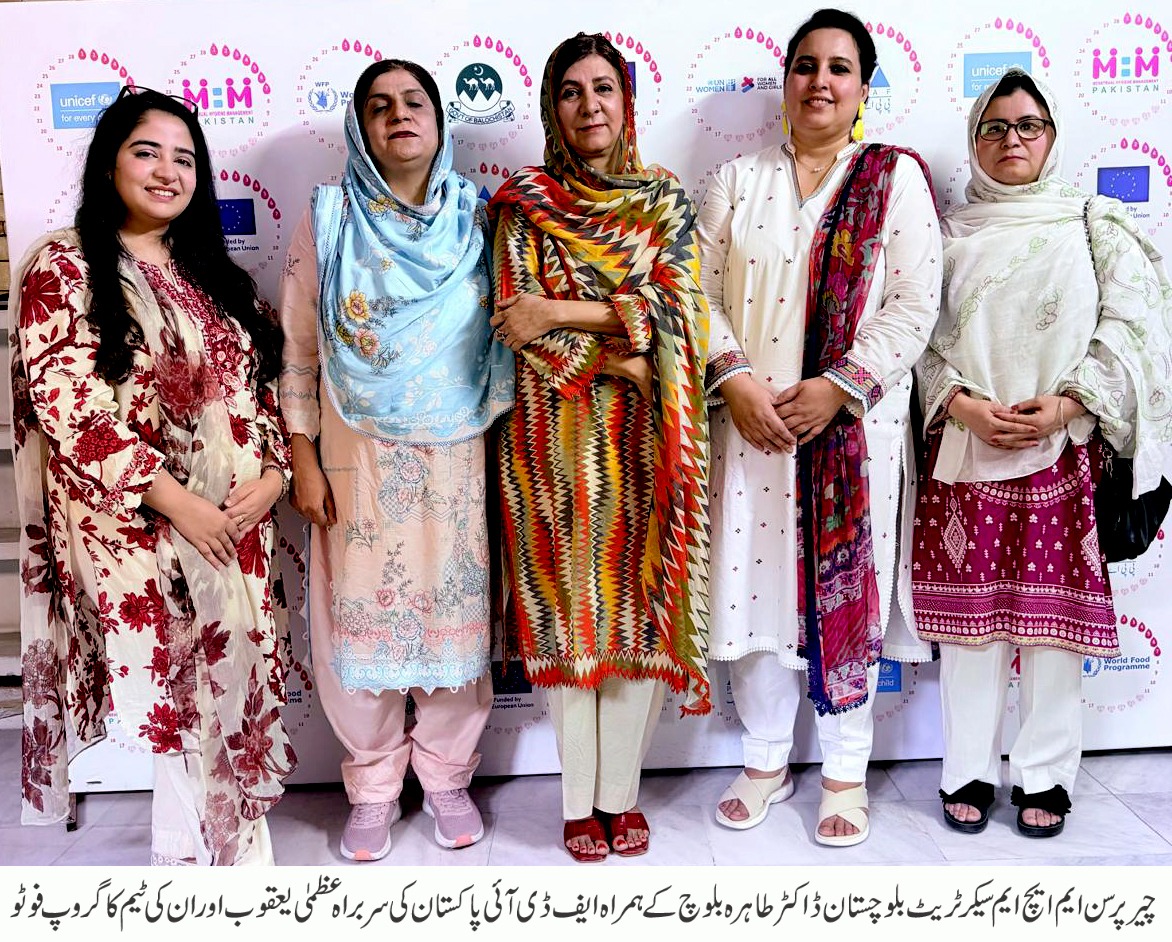
The call to action was made during a series of consultative engagements with provincial stakeholders in Quetta, led by Uzma Yaqoob, Executive Director of fdi.
Addressing the stakeholders, Uzma Yaqoob emphasized that menstrual health remains one of the most neglected areas of public service provision in Balochistan, despite directly impacting more than half of the population. She pointed out that in the absence of an overarching provincial framework, basic provision in schools, healthcare facilities, and administrative offices continues to rely entirely on the arbitrary capacity and willingness of individual institutions—leaving girls and women in some facilities adequately supported, while those in others are left without basic necessities.
Uzma Yaqoob stressed that infrastructure must not only be established but maintained sustainably. She highlighted that washroom privacy, clean running water, soap, safe waste-disposal mechanisms, and designated rest areas must be treated as fundamental rights rather than optional amenities. She further recommended that menstrual hygiene products be provided free of cost within educational institutions and public facilities.
Highlighting the province’s vulnerability to climate shocks, Uzma Yaqoob noted that recurrent floods, severe droughts, and resulting displacements make menstrual health a critical component of disaster preparedness and emergency response. In displacement settings, she observed, menstrual supplies and basic personal privacy are often the first necessities to be lost, yet humanitarian relief planning consistently overlooks these needs from the outset.
Furthermore, she called for sustainable policy interventions to bring down the cost of menstrual hygiene products. Uzma Yaqoob cautioned that financial affordability alone is insufficient; products must be physically available in schools, healthcare centers, and institutional facilities where women often lack independent means to acquire them.
She also pointed out the persistent gap in age-appropriate, accurate education, noting that educators are rarely trained or equipped to discuss the subject, leaving young girls dependent on incomplete or inaccurate information.
“A girl’s access to education and ability to stay in school must never depend on whether her school has a functional washroom with a locking door. Without a dedicated policy and an explicit budget line, we are leaving the dignity and future of our girls entirely to chance,” said Uzma Yaqoob.
Forum for Dignity Initiatives reaffirmed its commitment to continuing provincial stakeholder dialogues to accelerate the formal notification of the policy and ensure menstrual health and hygiene is prioritized in Balochistan’s development planning and annual budgeting.