
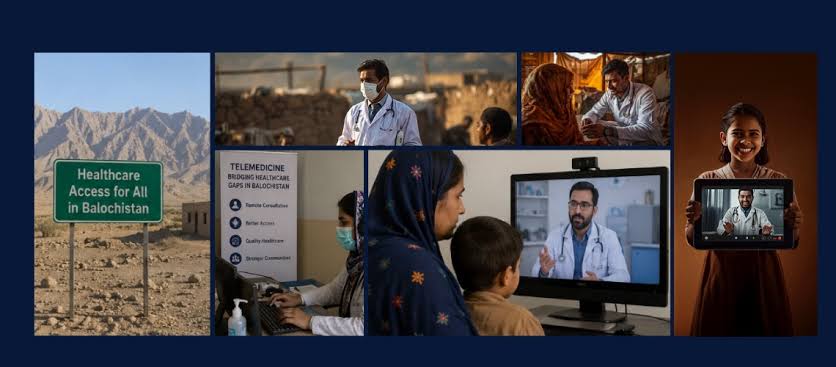
Digital Health: A New Pathway for Better Healthcare in Balochistan
By Sheikh Abdul Razaq
Healthcare systems are undergoing a profound transformation as digital technologies increasingly become part of planning, service delivery, disease surveillance and evidence-based decision-making. For Balochistan, where geographical distance and limited access to healthcare services present longstanding challenges, digital health offers an important opportunity to make the healthcare system more connected, responsive and data-driven.
The signing of a Memorandum of Understanding between the Health Department, Government of Balochistan, and the HISP Centre of the University of Oslo marks an important step in this direction. The partnership is aimed at strengthening the province’s digital health system, expanding the effective implementation of DHIS2, promoting local innovation and research, and enhancing the technical capacity of health professionals.
The agreement provides a framework for cooperation in several important areas, including the digitalisation of primary healthcare, artificial intelligence, climate change and health, research, technical capacity-building and the development of locally relevant innovations. It also envisages strengthening a sustainable DHIS2 core team within the Health Department so that digital health reforms can continue beyond individual projects and interventions.
Balochistan has already made significant progress in the use of DHIS2. The contribution of UNICEF Pakistan has been important in improving implementation, reporting compliance, staff training, provision of essential equipment, technical support and continuous system improvement. HISP Pakistan, with the support of UNICEF, has also played a key role in the technical configuration of DHIS2 and its adaptation to the province’s requirements.
These efforts demonstrate that digital transformation is not simply about introducing new technology. Its real value lies in using reliable information to improve decisions and ultimately healthcare outcomes. Timely and accurate health data can help policymakers and administrators identify gaps, monitor services, allocate resources more effectively and respond to emerging health challenges.
The partnership with the University of Oslo will further strengthen this process by facilitating the exchange of knowledge, research and practical experience. Joint studies, technical meetings, learning visits and academic publications will provide opportunities to learn from international experience while also sharing Balochistan’s own innovations with the global DHIS2 community.
Artificial intelligence and other emerging technologies can add another dimension to these reforms. Their responsible use can support analysis, forecasting and identification of health trends, while local innovation can help develop solutions that reflect the specific realities of Balochistan. At the same time, technology must remain a means to improve public services rather than an end in itself.
The most important measure of digital health reform will ultimately be its impact on people. A stronger digital system can contribute to better monitoring of primary healthcare facilities, improved planning, greater accountability and more efficient delivery of services, particularly in remote areas.
Balochistan’s partnership with the University of Oslo therefore represents an opportunity to combine international knowledge with local expertise. If sustained through institutional capacity, continuous training and evidence-based implementation, digital health can become an important pillar of a modern healthcare system that is more informed, integrated and responsive to the needs of the people.