
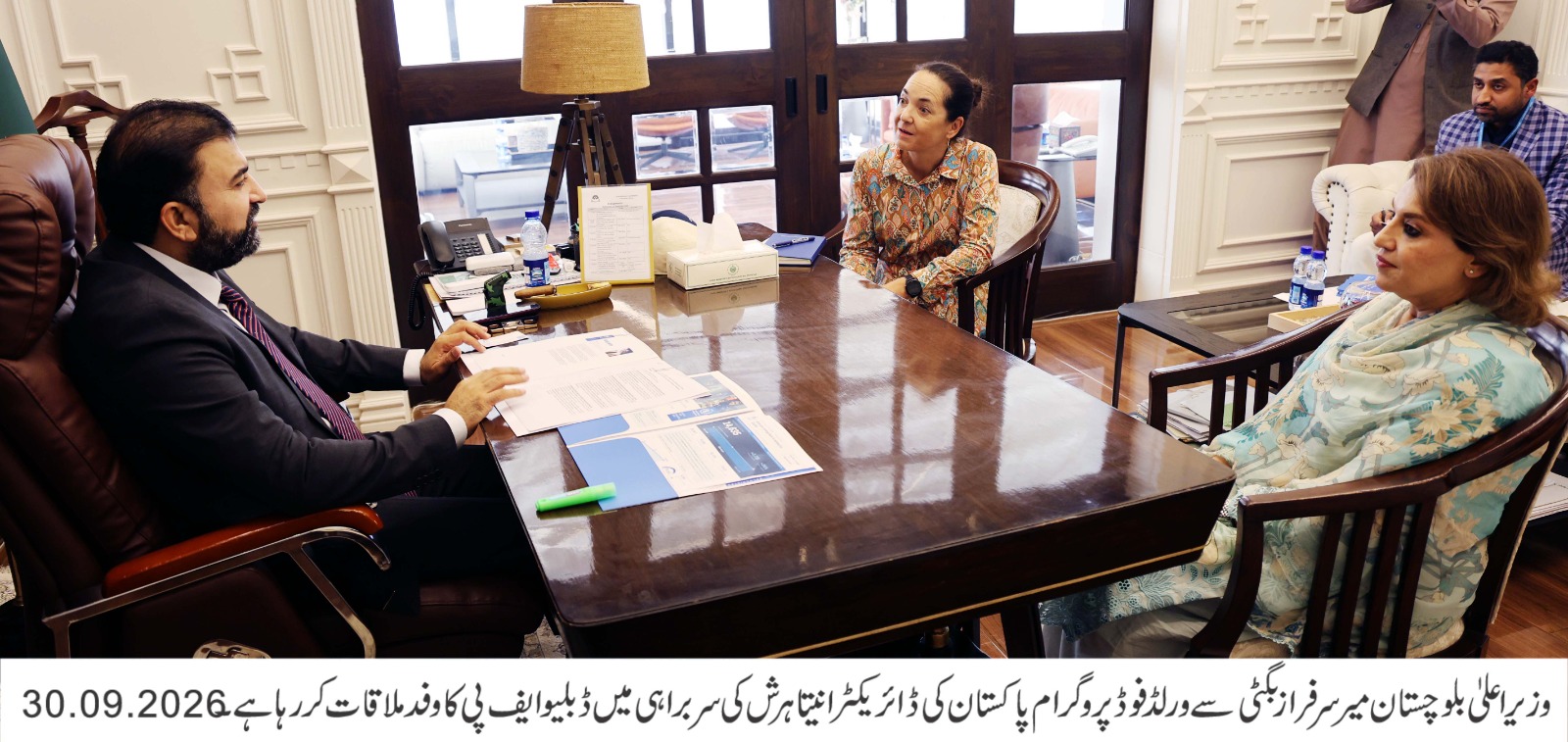
CM Balochistan, WFP Country Director Agree to Enhance Cooperation on Food Security
By Sheikh Abdul Razzaq
Food security and adequate nutrition are fundamental to the well-being of any society, and for Balochistan, addressing malnutrition remains an important development challenge requiring sustained attention and coordinated efforts. Recognising the significance of the issue, the Government of Balochistan and the World Food Programme (WFP) have agreed to further strengthen cooperation to improve food security, combat malnutrition and expand ongoing programmes across the province.
Chief Minister Balochistan Mir Sarfraz Bugti held a meeting with WFP Pakistan Country Director Anita Harsh in Quetta, during which the prevailing food and nutrition situation in Balochistan, ongoing WFP initiatives and future areas of cooperation were discussed. The meeting provided an opportunity to review existing programmes and explore ways to make joint interventions more effective and responsive to the nutritional needs of vulnerable communities.
Malnutrition is not simply a health concern. Its effects can extend to education, productivity, economic participation and overall human development. Children who do not receive adequate nutrition during their formative years can face challenges related to growth and development, while women, particularly mothers, require proper nutrition for their own well-being and that of their children. This makes investment in nutrition an essential component of long-term human development.
During the meeting, the Chief Minister emphasised the need for collective and coordinated action to address malnutrition and food insecurity. The provincial government, international development partners and relevant stakeholders all have important roles to play in developing sustainable responses to these challenges. Effective coordination can help ensure that available resources reach communities where they are most needed.
The Government of Balochistan has been pursuing measures aimed at improving social services and addressing challenges affecting vulnerable segments of the population. Cooperation with international organisations such as WFP can complement these efforts by bringing technical expertise, programme experience and international best practices to provincial initiatives.
Quality nutrition for women and children was also highlighted as an important area of focus. Ensuring access to nutritious food is essential for healthy child development and can contribute to stronger communities in the long term. Nutrition interventions, when combined with health, education, social protection and awareness programmes, can produce more sustainable outcomes than isolated measures.
The Chief Minister assured the WFP of the provincial government’s continued cooperation in ongoing programmes and expressed readiness to broaden collaboration in areas related to food security and human development. The discussions also covered future programmes that could strengthen nutritional support and improve the effectiveness and reach of existing interventions.
The meeting reflects the importance of partnerships in addressing complex development challenges. Balochistan’s geographical size, dispersed population and diverse socio-economic conditions require approaches that are practical, targeted and sustainable. Government institutions alone cannot address every dimension of food insecurity; collaboration with development partners, communities and other stakeholders is equally important.
Strengthening cooperation between Balochistan and WFP can therefore contribute to a more coordinated approach to nutrition and food security. More importantly, sustained attention to the nutritional needs of women and children can help build healthier generations and strengthen the province’s human capital.
Food security is ultimately about more than access to food. It is about ensuring that people, particularly vulnerable women and children, have the nutrition necessary to live healthy, productive and dignified lives. Continued cooperation between the provincial government and development partners can help move Balochistan closer to that objective.