
Building Global Pathways for Balochistan’s Skilled Youth
By Sheikh Abdul Razaq
Balochistan stands at an important juncture in its efforts to transform its young population into a skilled, productive and globally competitive workforce. With vast economic potential in mining, minerals, energy, agriculture, maritime activities and information technology, the province requires a technical and vocational education system that is closely aligned with the evolving needs of modern industries.
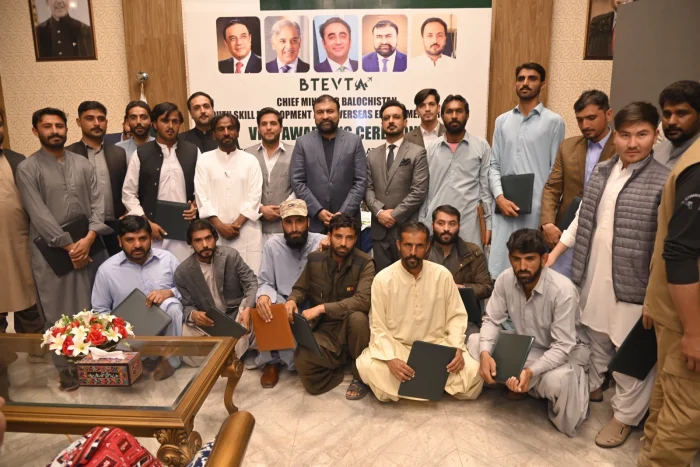
In this context, recent discussions between Balochistan’s Technical and Vocational Education and Training (TVET) authorities and the German side have focused on strengthening vocational education, improving training quality and creating international employment pathways for skilled youth from the province, particularly in Germany.
Germany has a longstanding record of cooperation in the development of technical education and vocational training in Balochistan. Through development cooperation, including the support provided by GIZ, important contributions have been made towards modernizing curricula, strengthening institutional infrastructure and introducing elements of the dual vocational training system. Such cooperation has helped promote practical, employment-oriented technical skills among young people.
The ongoing engagement reflects the importance of further adapting Balochistan’s TVET sector to international standards and emerging technologies. Modern economies increasingly require workers who possess not only theoretical knowledge but also practical competencies, technological awareness and industry-specific expertise. Strengthening these areas can improve employment prospects for young people while also supporting the province’s economic development.
Balochistan’s economic landscape offers several areas where specialized technical training can make a meaningful contribution. The mining and mineral sector, particularly in view of major projects such as Reko Diq and Saindak, requires trained personnel capable of working with modern exploration, extraction, processing and safety technologies. Similarly, Gwadar and the province’s coastline create opportunities in maritime engineering, port-related services and the wider blue economy.
Renewable energy represents another promising area. With considerable potential for solar and wind power, Balochistan can benefit from a workforce trained in the installation, operation and maintenance of modern renewable-energy systems. Technical education can also play a significant role in modern agriculture, water conservation, irrigation technologies and climate-resilient farming practices.
The rapidly expanding digital economy presents another important opportunity. Training programmes focused on information technology, digital services, software development and other high-demand digital skills can help connect young people from Balochistan with both domestic and international employment markets.
For these opportunities to translate into sustainable employment, strengthening the capacity of technical instructors and master trainers is equally important. Continuous professional development, updated teaching methods, exposure to modern technologies and stronger links with industry can improve the quality and relevance of vocational training.
An especially significant area of cooperation is the development of structured mechanisms through which qualified and certified youth from Balochistan can access employment opportunities in the German industrial market. Such a framework would require internationally recognized certification, quality assurance, language preparation, skills assessment and institutional coordination between training providers and potential employers.
The broader objective should be to establish a TVET system that responds directly to labour-market demand and provides young people with skills that remain relevant beyond provincial and national boundaries. International cooperation can play an important role in achieving this objective by bringing global expertise, modern training practices and industry linkages into the provincial skills-development framework.
Balochistan’s youth represent a substantial human resource with the potential to contribute to the province’s economic transformation. By strengthening technical education, introducing modern technologies and developing credible international employment pathways, the province can build a skilled workforce capable of participating in emerging industries at home and abroad. Continued cooperation in the TVET sector can help turn this potential into sustainable opportunities for the young people of Balochistan.