
Building a Stronger Sports Culture for Balochistan’s Youth
By Rakhshanda Saba
Sports are far more than a source of entertainment or physical activity. For young people, sports can provide a pathway to discipline, confidence, teamwork, leadership and healthy social engagement. In a province like Balochistan, where a large proportion of the population comprises young people, strengthening the sports sector can create meaningful opportunities for personal development while contributing to a more active and cohesive society.
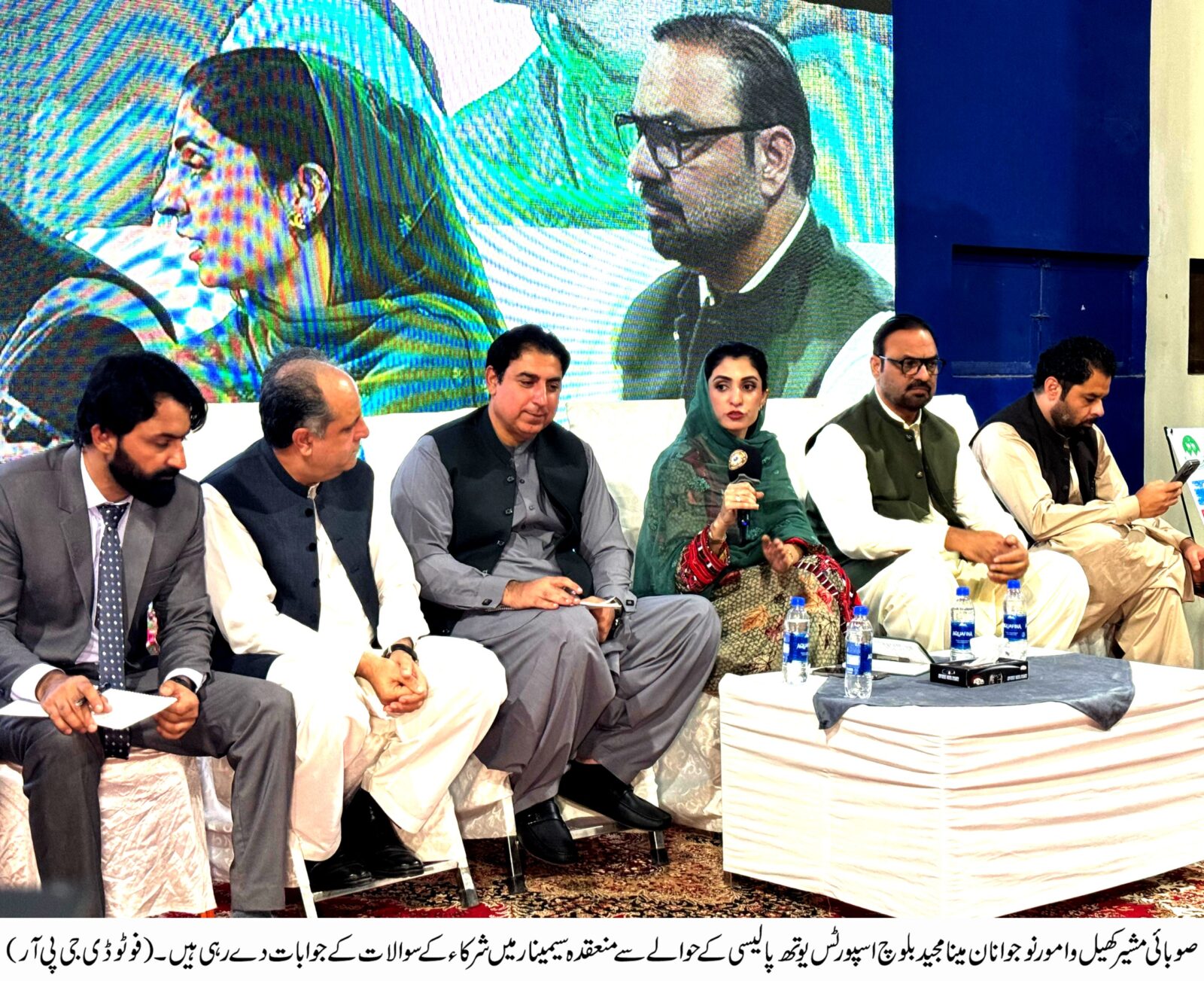
A Youth Sports Policy Seminar held at Ayub Stadium in Quetta brought together representatives of sports associations, athletes, young people and stakeholders from related sectors to discuss the future of sports in the province. The seminar provided a platform for participants to share their experiences, identify challenges and offer practical suggestions for improving sports facilities, opportunities and policymaking.
Provincial Advisor for Sports and Youth Affairs Meena Majeed Baloch attended the seminar along with the Secretary Sports and Youth Affairs and the Director General Sports. Her direct interaction with athletes, sports representatives and young participants reflected the importance of consultation in developing policies that respond to the realities faced by people involved in sports.
During the seminar, participants raised questions and presented proposals concerning sports promotion, infrastructure, access to facilities, opportunities for athletes and the broader direction of sports policy. These discussions highlighted the need for a structured approach that can identify gaps in existing arrangements while creating opportunities for talented young people across the province.
An effective sports policy must extend beyond major urban centres. Balochistan has considerable sporting talent, but many young athletes require better access to grounds, training facilities, equipment, professional coaching and competitive events. Developing sports infrastructure at district and divisional levels can help identify talent at an early stage and provide young people with opportunities to progress from local competitions to provincial, national and international platforms.
Equally important is the involvement of athletes and sports associations in policymaking. Those who remain directly engaged with sports understand practical challenges that may not always be visible at the administrative level. Their experiences can help policymakers design programmes that are realistic, accessible and responsive to actual needs.
Meena Majeed Baloch emphasised that the purpose of reviewing the Youth Sports Policy is to make the sports sector more effective and provide better opportunities for young people and athletes. She also stressed the importance of incorporating feedback from stakeholders into future policy development. Such an approach can help create a sense of ownership among athletes and sports organisations while improving the relevance of government initiatives.
Youth participation should remain at the centre of sports planning. Young people need spaces where they can develop their abilities, compete in a healthy environment and build confidence. Sports can also provide constructive alternatives for young people by encouraging teamwork, discipline and positive engagement with their communities.
The success of a sports policy, however, will ultimately depend on implementation. Clear priorities, adequate resources, transparent selection mechanisms, regular competitions, trained coaches and proper maintenance of facilities are essential for converting policy objectives into tangible opportunities.
The Youth Sports Policy Seminar in Quetta offered an important opportunity to bring stakeholders together and place their voices within the policy discussion. Continued consultation with athletes, associations and young people can help shape a sports system that recognises talent, expands access and supports the aspirations of Balochistan’s youth.
Investing in sports is, in many ways, an investment in the province’s young generation. With effective planning, inclusive policymaking and sustained institutional support, Balochistan can create a stronger sporting culture and provide its youth with opportunities to compete, excel and contribute positively to society.