
Bringing Essential Healthcare Closer to the People of Balochistan
By Rakhshanda Saba
Access to quality healthcare is not merely a public service; it is a fundamental right and an essential pillar of social development. In Balochistan, where vast distances, scattered populations and limited infrastructure have historically created challenges in accessing medical facilities, strengthening the healthcare system has emerged as a key priority of the provincial government.
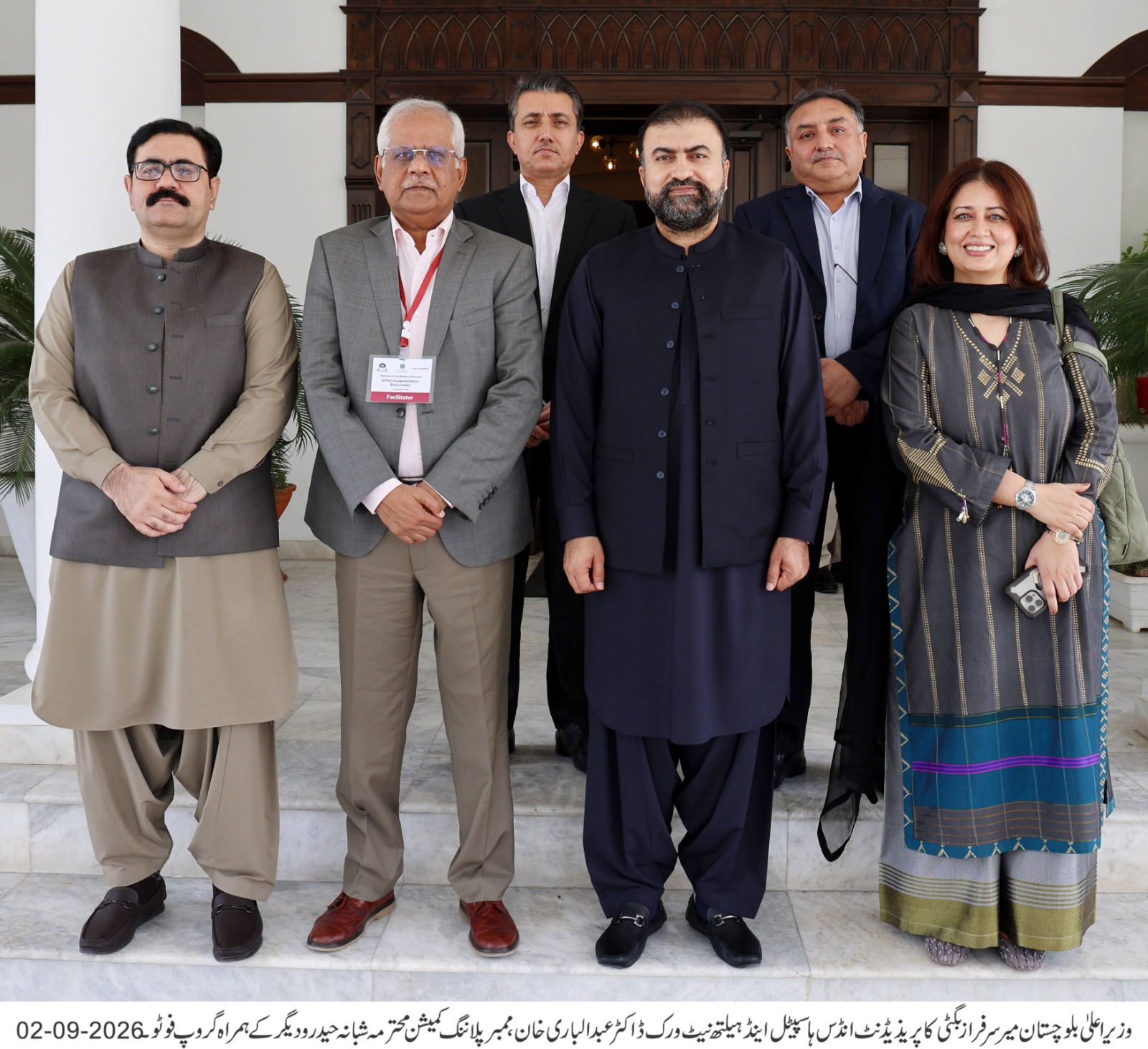
Chief Minister Balochistan Mir Sarfraz Bugti has reiterated that providing basic, quality and accessible healthcare to the people of the province remains among the government’s foremost priorities. Speaking at the inauguration ceremony of the Essential Package of Health Services Balochistan in Quetta, the Chief Minister said that all available resources were being utilised to improve healthcare delivery, with the health of mothers, girls and children receiving particular attention.
The government’s approach reflects an important shift from merely expanding infrastructure to ensuring that healthcare facilities actually function and remain accessible to communities. One of the significant steps in this direction has been the activation of 164 Basic Health Units across the province. The objective is straightforward but vital: people living in remote and underserved areas should not have to travel long distances merely to receive essential medical care.
For a province as geographically expansive as Balochistan, strengthening primary healthcare can have a transformative impact. Functional basic health facilities can provide early diagnosis, preventive care, maternal and child healthcare, immunisation support and essential treatment closer to people’s homes. Such services can also reduce pressure on major hospitals in urban centres and enable the healthcare system to respond more effectively to the needs of local communities.
The emphasis on women and children is particularly significant. Maternal and child health indicators are closely linked to the availability of timely medical care, trained healthcare professionals and functioning primary healthcare facilities. Improving access at the local level can help ensure that women receive appropriate care during pregnancy and childbirth, while children can benefit from timely medical attention and preventive healthcare.
An encouraging example was highlighted by the Chief Minister from a remote area of Dera Bugti, where Dr Bari played a role in making a hospital functional. The initiative demonstrates how commitment, professional responsibility and effective utilisation of available resources can translate into tangible benefits for ordinary citizens. A particularly meaningful milestone came when the facility witnessed the birth of its first child. The newborn was named Bakht Muhammad, turning what might appear to be a routine medical event into a symbol of hope for a community that has long faced difficulties in accessing healthcare.
Such examples underline a broader principle: healthcare reform is ultimately measured not by buildings or announcements, but by whether a mother can safely deliver a child, whether a sick person can receive timely treatment and whether families in remote areas can access essential medical services without undertaking difficult and costly journeys.
The Chief Minister also emphasised that the provincial government remains committed to fulfilling its commitments made with its partners. He described the performance of the Health Department as satisfactory and noted that the tasks assigned to it had been completed with dedication, hard work and a sense of responsibility.
His message also carried a wider governance philosophy. Responding to criticism of his position on law and order, Mir Sarfraz Bugti maintained that the government’s focus was not on wasting time in political arguments but on taking practical measures to resolve public problems. His emphasis was that every child in Balochistan has a right to basic facilities and that ensuring this right is a responsibility of the state.
This perspective places healthcare within the larger framework of human development. Peace, education, employment and healthcare are interconnected components of a stable and progressive society. Sustainable development cannot be achieved if communities remain deprived of basic medical services.
The provincial government’s continued focus on primary healthcare therefore deserves attention as an important component of its broader development agenda. Activating existing health facilities, improving service delivery and bringing essential services closer to communities can create a stronger foundation for long-term healthcare reform.
Health Department officials and provincial Health Minister Bakht Muhammad Kakar also highlighted the ongoing initiatives and performance of the department during the ceremony. The presence of Adviser for Women Development Dr Rubaba Khan Buledi, Opposition Leader Mir Younas Aziz Zehri, senior health officials and other stakeholders reflected the importance attached to the issue across the provincial political and administrative spectrum.
The real test of these initiatives will be their continuity, quality and reach. If functional healthcare facilities remain adequately staffed, equipped and monitored, the impact can extend far beyond individual patients. It can improve maternal health, protect children, strengthen families and enhance the overall quality of life in some of the province’s most underserved communities.
Balochistan’s healthcare challenge is undoubtedly complex, but meaningful progress begins with practical steps. Ensuring that essential healthcare reaches people where they live is one such step. With sustained attention, institutional commitment and effective implementation, the province can move towards a healthcare system that is not only more accessible, but also more responsive, equitable and sustainable.
The vision is ultimately simple: no matter how remote the village, every citizen—and every child—should have a fair opportunity to receive essential healthcare with dignity and without unnecessary hardship. That is where lasting improvement in Balochistan’s health sector can truly begin.