
Balochistan’s Zero-Tolerance War Against Drugs Is a Fight for the Future
By Sheikh Abdul Razaq
The fight against drugs is not merely a law-enforcement challenge; it is a battle for the future of society. In Balochistan, the provincial government has adopted a clear and uncompromising zero-tolerance policy against narcotics, with a particular focus on protecting young people from the destructive consequences of drug abuse.
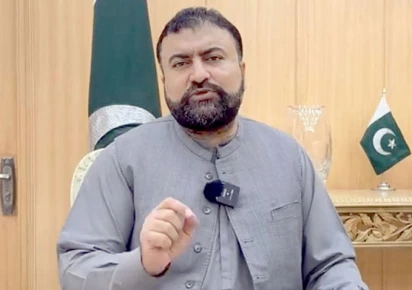
Chief Minister Balochistan Mir Sarfraz Bugti has reiterated that safeguarding the younger generation from the menace of drugs remains one of the government’s foremost priorities. The scale of narcotics seizures and destruction during the past two years reflects the seriousness with which the provincial government views this challenge.
According to the Chief Minister, drugs worth more than Rs133 billion have been seized and destroyed in Balochistan over the last two years. The seizures include 1,638 kilograms of ice, commonly known as crystal methamphetamine, and 620 kilograms of hashish. More than 27,000 bottles and cans of foreign liquor and beer were also seized and destroyed during the same period.
These figures represent more than quantities and financial values. Behind every successful seizure is the prevention of drugs from reaching communities, schools, colleges and workplaces. Every kilogram of narcotics taken off the streets means fewer opportunities for traffickers to exploit vulnerable young people and damage their lives.
Balochistan’s geographical position presents unique challenges in the fight against narcotics. Its vast territory and strategic location make effective surveillance, intelligence-sharing and coordination among law-enforcement agencies particularly important. The government’s commitment to strengthening these mechanisms is therefore essential for achieving sustainable results.
However, the war against drugs cannot be won through enforcement alone. Drug abuse is also a social and public-policy challenge. Prevention, awareness, rehabilitation and community participation must complement police and other law-enforcement operations. Families, educational institutions, religious scholars, civil society and the media all have an important role to play in creating awareness about the devastating physical, psychological and social consequences of narcotics.
Young people are the most valuable asset of any society. Their energy, creativity and potential can become the foundation of economic growth and social progress when channelled towards education, skills, sports and productive activities. Drug addiction, on the other hand, can destroy individual lives, weaken families and impose a long-term burden on society.
The government’s stated resolve to make law-enforcement operations against narcotics more effective is therefore a welcome step. What is required now is continuity, coordination and sustained investment in both enforcement and prevention. The supply chain must be disrupted, traffickers must face the law, and vulnerable individuals must have access to rehabilitation and support.
A drug-free Balochistan should not be viewed merely as a slogan. It should be treated as a long-term policy objective requiring collective responsibility. The seizure and destruction of narcotics worth billions of rupees demonstrates that progress is possible when institutions work with determination.
Ultimately, the real measure of success will not only be the quantity of drugs seized but the number of young lives protected from addiction. Balochistan’s zero-tolerance approach is, at its core, an investment in its youth—and therefore an investment in the province’s future.