
Balochistan’s Reform Agenda Enters a New Phase with Focus on Merit, Digital Governance and Data-Driven Services
By Rukhsanda Saba
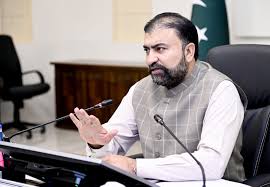
The Balochistan government has reaffirmed its commitment to sustaining the pace of institutional reforms, improving public service delivery and introducing modern technology across provincial departments. The commitment was reiterated at a meeting of the Secretaries Committee chaired by Chief Minister Balochistan Mir Sarfaraz Bugti at the Chief Minister’s Secretariat in Quetta on Monday.
The meeting reviewed the performance of provincial departments over the past two and a half years, ongoing development projects and reforms undertaken in various sectors. Provincial Ministers Mir Sadiq Umrani, Mir Zahoor Ahmed Buledi, Mir Saleem Khan Khosa and Mir Shoaib Nosherwani participated in the meeting, reflecting the government’s focus on strengthening coordination between the political and administrative leadership.
A significant part of the meeting focused on reforms in the health sector, particularly the implementation of the District Health Information System 2 (DHIS2). Secretary Health Balochistan Mujeeb-ur-Rehman Panezai briefed the meeting on progress in digital health reporting, noting a marked improvement in data reporting and reporting compliance across the health system.
The expansion of DHIS2 is being pursued as part of a broader effort to transform healthcare management through reliable data, digital tools and evidence-based decision-making. The next phase will focus on the digitalisation of primary healthcare, promotion of Artificial Intelligence, local innovation and research, with the objective of making health services more responsive and efficient.
The Secretary Health also highlighted his recent visit to Oslo, where Balochistan’s digital health and reform initiatives received appreciation at an international forum. The effective implementation of DHIS2 and the province’s growing emphasis on using data for health planning were recognised as important developments.
Under cooperation with the HISP Centre at the University of Oslo, steps are also being taken to promote joint research, technical exchanges and international recognition of Balochistan’s emerging digital health model. The Health Department is further strengthening its DHIS2 core team and investing in the capacity building of relevant personnel to ensure sustainable use of the system.
Chief Minister Mir Sarfaraz Bugti expressed satisfaction over the overall performance of provincial departments during the past two and a half years. He stressed that the reform process must continue with the same focus and that merit should remain at the centre of government policy.
The Chief Minister emphasised the importance of ensuring merit-based and AI-based recruitment systems, saying that modern technology and data-driven mechanisms should be used more effectively to improve public services. The emphasis on transparent recruitment and technology-based decision-making reflects a broader effort to strengthen institutional efficiency and public confidence in government systems.
The provincial ministers participating in the meeting appreciated the performance of the provincial government under the leadership of Chief Minister Mir Sarfaraz Bugti. They highlighted reforms in different sectors, promotion of merit, transparency, improvement in public services and greater use of modern technology as important features of the government’s reform agenda.
The ministers also termed AI-based recruitment and merit-oriented systems vital for the future of Balochistan. They reaffirmed their commitment to advancing the ongoing reform process and assured their continued cooperation for the successful implementation of the provincial government’s reform agenda.
The meeting thus underlined a clear policy direction: Balochistan’s development is increasingly being linked with institutional reform, merit, digital transformation and effective use of data. If sustained, this approach can help provincial departments move beyond conventional administrative practices towards a more transparent, technology-enabled and citizen-focused system of governance.