
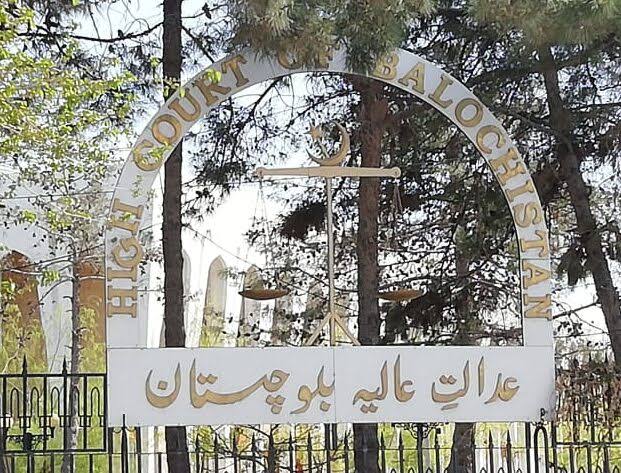
Balochistan High Court directs protection of Seriab Service Road and drainage system
Quetta, The Balochistan High Court bench comprising Chief Justice Muhammad Kamran Khan Mulakhail and Justice Muhammad Najamuddin Mengal heard a constitutional petition concerning ongoing development projects in Quetta, particularly the Seriab Service Road and the stormwater drainage system.
During the hearing, Additional Advocate General Zahoor Ahmed Baloch, Additional Attorney General Muhammad Farid Dogar, Project Director of the Chief Minister’s Quetta Development Package Muhammad Rafiq, Deputy Director (Law and Regulations) Urban Planning and Development Department Kaleemullah, and other officials appeared before the court.
The Project Director submitted a progress report stating that the Seriab Service Road project had been divided into three phases, with asphalt base course completed on 14,500 meters out of a total 15,140 meters, while work at obstructed points remained pending. Asphalt wearing course had been completed on 6,500 meters, and bridge construction under the project was also finished. The report further noted that 85 percent of drainage work along the road had been completed, while kerbstone and paver installation stood at 30 percent.
The court was informed that unauthorized excavation had been carried out on newly constructed sections of the road by unidentified individuals linked to cable and communication companies, causing damage to public infrastructure and disrupting ongoing development work. Letters issued by the Project Director on February 13 and August 20, 2026, directing authorities to safeguard newly built roads and footpaths from unnecessary excavation, were also placed on record.
The bench declared that repeated unauthorized digging of newly constructed roads, footpaths, and urban infrastructure was unacceptable. It directed that no excavation or utility work be undertaken without prior approval from the Project Director, and where utility corridors exist, they must be used to avoid damage. The court warned that violations of its orders would invite strict legal action, including contempt proceedings.
Deputy Commissioner Quetta was instructed to ensure immediate legal action against individuals or institutions found violating court directives or engaging in unauthorized excavation. The Additional Advocate General’s office was directed to notify all government, semi-government, and private companies that obtaining an NOC from the Project Director was mandatory before commencing any work in developed areas.
The court emphasized that criminal proceedings would be initiated against violators to prevent damage to urban infrastructure. Advocate Attaullah Langau also filed CMA No. 3504/2026, a copy of which was provided to the Additional Advocate General for review. The court subsequently issued its orders and directed that copies be sent to the offices of the Additional Attorney General and Advocate General Balochistan for compliance.