
Education Minister Stresses Professional Training for Effective Governance
By Rakhshanda Saba
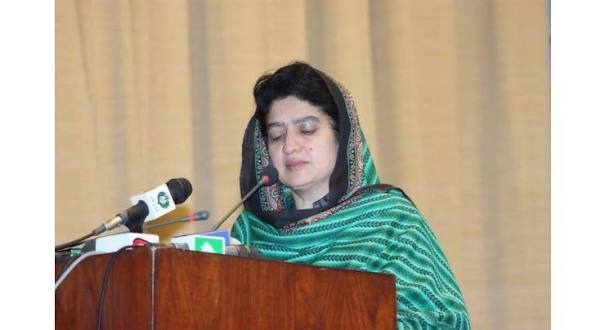
QUETTA: Provincial Minister for Education Raheela Hameed Khan Durrani has emphasized the importance of continuous professional training for government officers, saying that strengthening administrative capacity and developing modern governance skills are essential for improving the quality of public service delivery.
She was speaking at the closing ceremony of the 47th Mid-Career Management Course (MCMC) held at the National Institute of Public Administration (NIPA), Quetta, where she attended the concluding session and distributed certificates among officers who successfully completed the training programme.
Addressing the ceremony, the minister said government officers constitute an important pillar of the state machinery and their professional capabilities have a direct bearing on the effectiveness of public administration. She stressed that changing administrative requirements demand continuous learning, institutional development and greater awareness of contemporary approaches to governance.
She said training programmes such as the Mid-Career Management Course provide public servants with an opportunity to strengthen their administrative skills, broaden their understanding of governance and develop the leadership qualities required to deal with increasingly complex challenges in the public sector.
Effective governance, she observed, depends not only on policies and institutional structures but also on the ability of public officials to translate those policies into practical outcomes. Officers working in different departments are required to make decisions, manage public resources, coordinate with stakeholders and respond to the needs of citizens. Continuous professional development can help them perform these responsibilities with greater efficiency and understanding.
The minister also highlighted the importance of leadership and decision-making skills in public administration. She said modern governance requires officers to remain responsive to changing circumstances and equipped with the knowledge needed to address emerging administrative and social challenges.
Training institutions, she added, have an important role in developing a professional public service by providing officers with opportunities to learn from experienced professionals, exchange views and examine contemporary governance practices. Such institutions can also contribute to building a culture of professionalism, accountability and institutional learning within the public sector.
On the occasion, Director General NIPA Dr. Ali Raza Shah briefed the participants about the institute’s mandate, training programmes and various initiatives aimed at enhancing the professional capacity of government officers. The briefing highlighted the role of NIPA in providing structured training and capacity-building opportunities to public servants at different stages of their careers.
The 47th Mid-Career Management Course brought together 27 government officers who successfully completed the prescribed training. At the conclusion of the ceremony, Minister Raheela Durrani distributed certificates among the participants and congratulated them on completing the course.
The completion of a mid-career management programme represents an important stage in the professional development of public officials. As officers progress through their careers, the nature of their responsibilities often becomes broader and more complex, making leadership, coordination and strategic decision-making increasingly important.
For Balochistan, where effective administration is closely linked with the delivery of public services across a geographically vast province, strengthening the capacity of government institutions remains an important requirement. Investment in human resources and professional development can help public officials respond more effectively to administrative responsibilities and the expectations of citizens.
The message emerging from the NIPA Quetta ceremony is therefore relevant beyond the participants of the course. Professional training is a continuing process, and a capable public administration depends on institutions that encourage learning, adaptability and responsible decision-making. By equipping officers with updated knowledge and practical administrative skills, training programmes can contribute to a more effective and responsive system of governance.