
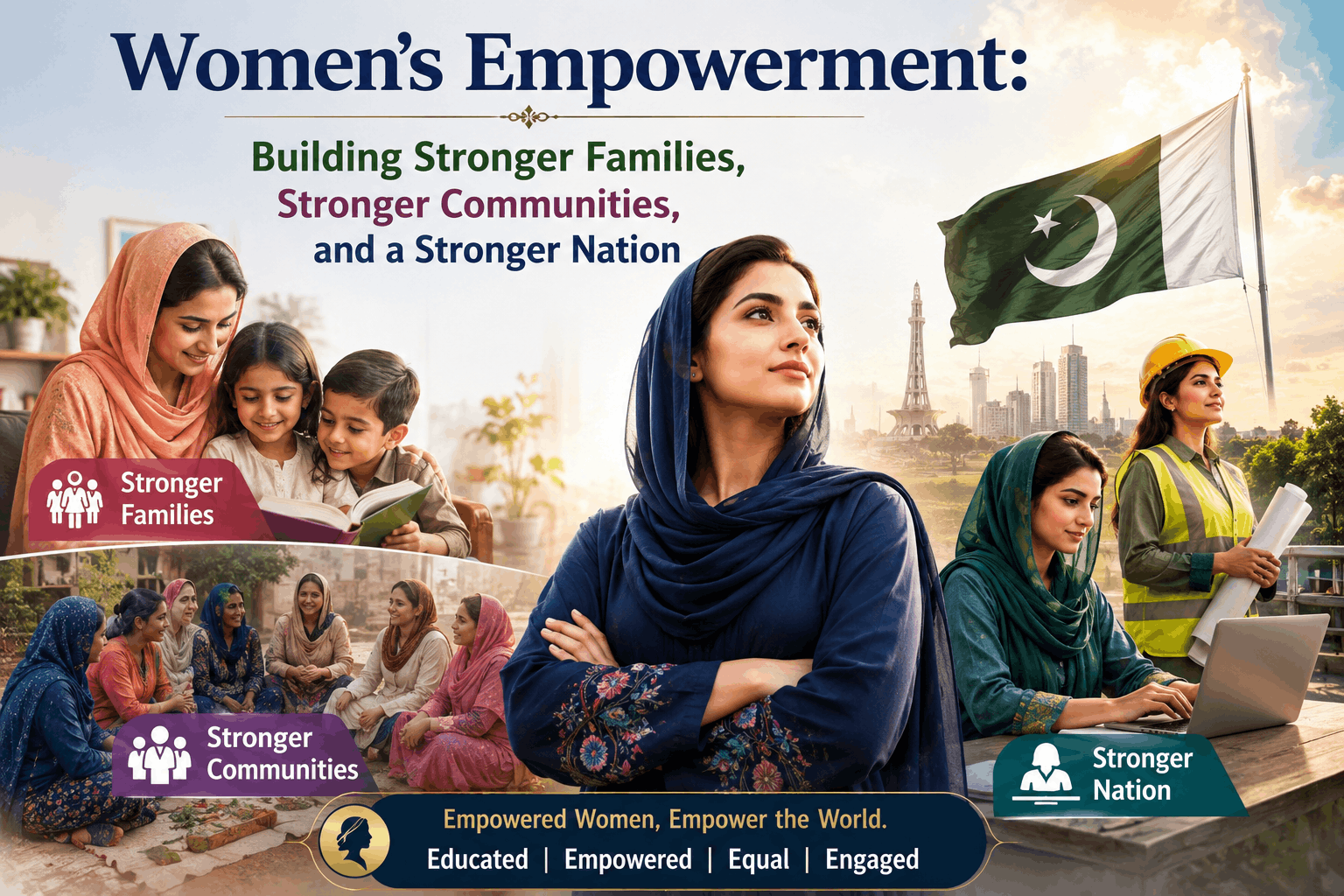
Women’s Empowerment: Building Stronger Families, Stronger Communities, and a Stronger Nation
By Rukhsanda Saba
Women’s empowerment is not merely a social objective; it is a fundamental requirement for sustainable development, economic progress, and national prosperity. A society that invests in the education, health, economic participation, and leadership of women lays the foundation for a more inclusive and resilient future. Around the world, nations that have prioritized gender equality have witnessed remarkable improvements in economic growth, social stability, and human development. Pakistan, particularly provinces like Balochistan, has immense potential to achieve similar progress by creating greater opportunities for women and girls.
Empowerment begins with education. An educated woman transforms not only her own life but also the lives of her family and future generations. She is better equipped to make informed decisions, contribute to the workforce, and participate actively in society. Access to quality education enables girls to develop confidence, leadership skills, and the ability to pursue careers in diverse fields such as medicine, engineering, business, education, technology, and public service. Investing in girls’ education is therefore one of the most effective investments any society can make.
Economic empowerment is another vital pillar. Women who have access to employment, entrepreneurship, financial resources, and vocational training become active contributors to economic growth. They create businesses, generate employment opportunities, and strengthen household incomes. Financial independence also enhances women’s ability to make decisions regarding healthcare, education, and the overall well-being of their families. Governments, financial institutions, and the private sector should continue expanding access to credit, skills development, and market opportunities for women entrepreneurs.
Healthcare remains equally important in the empowerment journey. Healthy women contribute more effectively to their families, workplaces, and communities. Accessible maternal healthcare, preventive medical services, nutrition, and mental health support are essential components of women’s development. Strengthening healthcare systems and ensuring equal access to quality medical services improve not only women’s health outcomes but also broader community well-being.
Women’s participation in leadership and decision-making is another defining measure of progress. Across Pakistan, women are increasingly serving as legislators, judges, civil servants, entrepreneurs, academics, journalists, and community leaders. Their contributions demonstrate that leadership is strengthened when diverse perspectives are included. Encouraging greater female representation in public institutions and policymaking creates more balanced, inclusive, and effective governance.
In Balochistan, the role of women is evolving steadily despite longstanding social and geographical challenges. More young women are pursuing higher education, joining professional fields, and contributing to public service. Government initiatives promoting girls’ education, healthcare, vocational training, digital literacy, and economic inclusion are opening new avenues of opportunity. These efforts deserve continued support from families, educational institutions, civil society, and development partners to ensure that every capable woman has the chance to realize her full potential.
Technology has also become a powerful tool for women’s empowerment. Digital platforms provide opportunities for online education, remote employment, entrepreneurship, freelancing, and access to financial services. Women can now build businesses from their homes, connect with global markets, and acquire valuable skills through online learning. Expanding digital inclusion, particularly in rural and underserved areas, can significantly accelerate women’s participation in the modern economy.
However, empowerment is not solely the responsibility of governments. Families and communities play an equally important role. Parents who encourage their daughters to pursue education and careers contribute directly to national development. Employers who provide safe, respectful, and inclusive workplaces strengthen both productivity and social harmony. Media organizations, educators, and community leaders also have a responsibility to promote positive narratives that recognize women’s achievements and encourage equal opportunities.
True empowerment is achieved when women are respected not because of symbolic representation, but because of their abilities, contributions, and leadership. It means ensuring equal access to education, healthcare, employment, justice, and opportunities for personal and professional growth. It means removing barriers that limit potential and replacing them with systems that reward talent, dedication, and merit.
The future of Pakistan depends on the full participation of its women. Every educated girl, every successful entrepreneur, every dedicated teacher, every skilled doctor, every committed public servant, and every courageous community leader strengthens the nation’s social and economic fabric. Women’s empowerment is not about competing with men; it is about working together to build stronger families, stronger communities, and a stronger Pakistan. When women thrive, society prospers, and the nation moves confidently toward a future defined by equality, dignity, and sustainable development.