
Makkah Defence Agreement: A New Expression of Brotherhood, Security and Regional Stability
By Sheikh Abdul Razaq
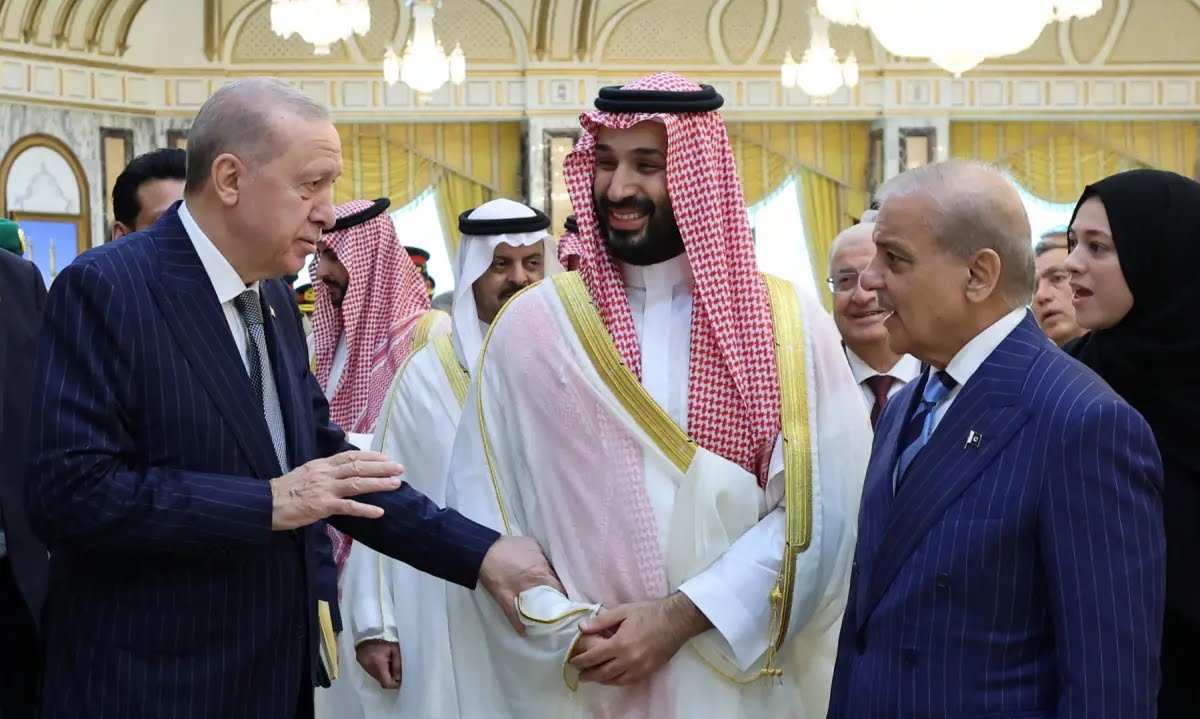
The historic Makkah Joint Defence Agreement between Pakistan and Saudi Arabia represents an important milestone in the evolving relationship between two brotherly Muslim nations. Signed in the holy city of Makkah, the agreement carries strategic, diplomatic and symbolic significance, reaffirming a shared commitment to collective security, peace, stability and prosperity.
The agreement comes at a time when the regional and global security environment is undergoing profound changes. Growing geopolitical tensions, emerging security threats and evolving strategic challenges have made cooperation among responsible states increasingly important. Against this backdrop, the Makkah agreement reflects the determination of Pakistan and Saudi Arabia to strengthen their defence cooperation and enhance their ability to respond collectively to challenges affecting their security and stability.
The relationship between Pakistan and Saudi Arabia is not merely based on conventional diplomacy. It is rooted in shared faith, historical bonds, mutual respect and strong people-to-people relations. Over the decades, the two countries have developed close cooperation in defence, economy, education, energy and other fields. The latest agreement provides an opportunity to further institutionalise and strengthen this longstanding partnership.
The significance of the agreement also extends beyond bilateral defence cooperation. Pakistan occupies an important strategic position connecting South Asia with the Middle East, while Saudi Arabia remains a key political, economic and religious centre of the Muslim world. Stronger cooperation between the two countries can therefore contribute positively to the broader regional security environment.
Importantly, the agreement should be viewed as an instrument for peace and deterrence rather than confrontation. Effective defence cooperation can help prevent conflict by strengthening preparedness and creating a sense of collective security. At its core, the agreement represents a shared desire to protect sovereignty, ensure national security and promote a stable environment in which economic development and prosperity can flourish.
The public response in Balochistan has reflected the depth of sentiment attached to this historic development. Across all divisional and district headquarters of the province, the national flags of Pakistan, Saudi Arabia and Türkiye have been prominently displayed as a gesture of solidarity and brotherhood. Government offices and important public places have been decorated with the flags, creating a visible expression of the province’s support for closer ties among the three brotherly nations.
Panaflex banners carrying the photographs of the leaders of Pakistan, Saudi Arabia and Türkiye, along with Pakistan’s Chief of Army Staff, Field Marshal General Syed Asim Munir, have also been displayed across Balochistan. These displays have been arranged to warmly welcome and publicly acknowledge the historic defence understanding and the spirit of unity that it represents.
The participation of communities across Balochistan carries particular significance. The province has historically maintained strong emotional and fraternal ties with the people of Saudi Arabia and the wider Muslim world. The display of national flags and messages of solidarity demonstrates that the spirit of the Makkah agreement resonates beyond government institutions and into the public sphere.
The agreement also provides an opportunity to promote a broader vision of cooperation among Muslim countries. In today’s complex international environment, unity does not necessarily mean uniformity. Countries can maintain independent foreign policies while cooperating on issues of common interest, including security, counterterrorism, humanitarian assistance and regional stability.
Türkiye’s broader relationship with Pakistan and Saudi Arabia also adds another important dimension to this evolving strategic environment. Stronger interaction among the three countries can create opportunities for enhanced diplomatic coordination and greater cooperation in areas ranging from defence and technology to trade, investment and youth development.
For Pakistan, the agreement reinforces its role as a country committed to peace while maintaining the capacity to safeguard its national interests. For Saudi Arabia, it provides an additional framework for defence cooperation with a trusted strategic partner. For the wider Muslim world, it conveys a message of unity, mutual confidence and collective responsibility.
The real measure of the agreement, however, will lie in its implementation. Sustained institutional dialogue, professional military exchanges, joint preparedness and cooperation in emerging security domains can transform the agreement from a historic document into a practical and enduring framework.
The Makkah Defence Agreement is therefore more than a security arrangement. It is a reaffirmation of brotherhood and mutual trust, and an expression of a shared aspiration for a peaceful and stable future. The enthusiastic welcome across Balochistan, marked by the display of the flags of Pakistan, Saudi Arabia and Türkiye and the installation of banners honouring the leadership associated with this milestone, reflects the public importance attached to the agreement.
If pursued with wisdom, responsibility and a clear commitment to peace, the Makkah agreement can become a meaningful contribution to regional stability and a stronger foundation for cooperation among brotherly nations. Its message from the holy city of Makkah is ultimately one of unity, security and shared prosperity.