
Editorial
Balochistan Needs Governance Reform, Not Administrative Expansion
The decision by the Government of Balochistan to review and restructure provincial departments is a timely recognition that effective governance depends not on the size of the administrative machinery, but on its ability to deliver results. At a time when public resources are limited and citizens continue to demand better education, healthcare, infrastructure and essential services, administrative reform is no longer optional. It is a necessity.
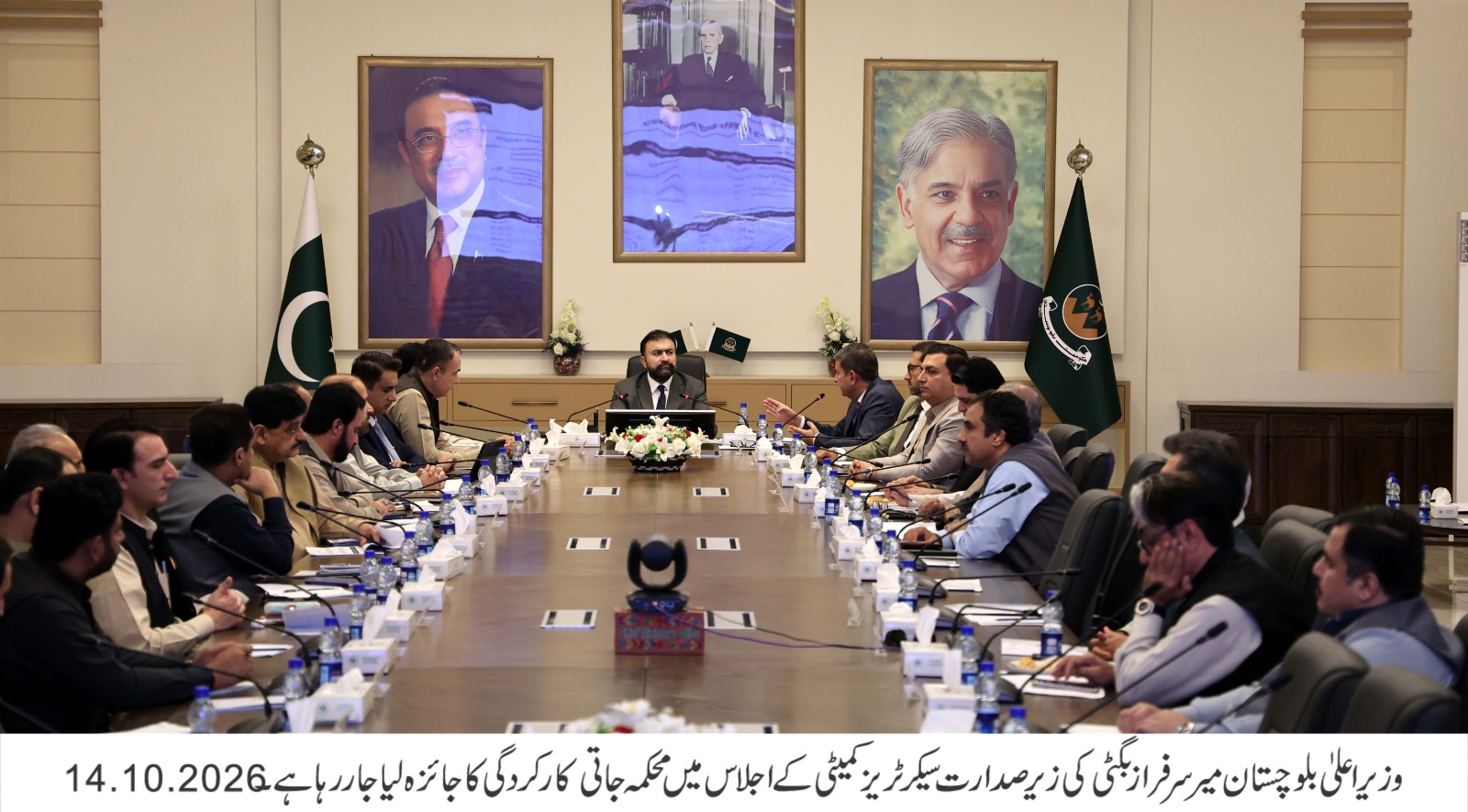
Chairing a review meeting of the Secretaries Committee on October 14, Chief Minister Mir Sarfraz Bugti expressed concern over unnecessary recruitment and the rising burden of non-development expenditure. He called for a comprehensive review of departmental structures, workforce requirements and performance, while seeking recommendations on merging departments that perform similar functions. The proposed initiative presents an opportunity to address long-standing administrative weaknesses and redirect public resources towards the needs of citizens.
The central challenge facing Balochistan is not simply a shortage of funds. It is also the question of how effectively available resources are managed and translated into tangible public benefits. When a disproportionate share of expenditure is absorbed by salaries, administrative overheads and recurring costs, the capacity to invest in development and improve service delivery becomes increasingly constrained. Public spending must therefore be assessed against its outcomes rather than merely the size of departmental budgets.
Government employment has an important role in a province where economic opportunities remain limited. However, public-sector recruitment must be guided by genuine institutional requirements, transparent procedures and long-term fiscal sustainability. Departments should have sufficient qualified personnel to fulfil their responsibilities, but indiscriminate recruitment cannot be a substitute for a comprehensive employment policy. Sustainable job creation requires investment in skills, private enterprise, agriculture, industry and emerging economic sectors.
Similarly, the proposed merger of departments with overlapping responsibilities deserves serious consideration. Administrative duplication can create unnecessary costs, weaken coordination and delay decisions. Yet restructuring must be based on a careful assessment of each department’s mandate, workload and public value. Merging institutions simply to reduce their number may produce new complications if responsibilities are not clearly defined. The objective should be a leaner, better-coordinated and more capable administration, not restructuring for its own sake.
Equally important is the need to establish a stronger culture of accountability. Every department should have clearly defined responsibilities, measurable performance indicators and a mechanism for reviewing results. Secretaries and departmental heads must be assessed not only on expenditure and procedural compliance, but also on improvements in service delivery. Citizens should be able to see whether public spending is producing better-equipped hospitals, functional schools, reliable municipal services and more efficient government offices.
The chief minister’s emphasis on acknowledging internal administrative weaknesses also carries an important message. Blaming external circumstances cannot replace institutional self-assessment. Lasting reform requires the political leadership and bureaucracy to identify shortcomings honestly, enforce discipline consistently and accept responsibility for outcomes. Such an approach can help build public confidence in government institutions.
However, the real test will lie in implementation. The recommendations submitted by departmental secretaries must lead to concrete decisions, realistic timelines and regular monitoring. Workforce rationalisation should be evidence-based, lawful and fair to existing employees, while protecting essential services and institutional capacity. Savings achieved through reform should be directed towards clearly identified public priorities.
Balochistan needs an administration that is financially responsible, professionally capable and responsive to its people. The proposed restructuring offers a valuable opportunity to move in that direction. Its success will not be measured by the number of departments merged or posts reduced, but by whether citizens receive better services, public money is spent more wisely and government institutions become more accountable.
Ultimately, good governance is not about maintaining a larger bureaucracy. It is about building a government that delivers more with the resources entrusted to it. For Balochistan, that must be the defining purpose of administrative reform.