
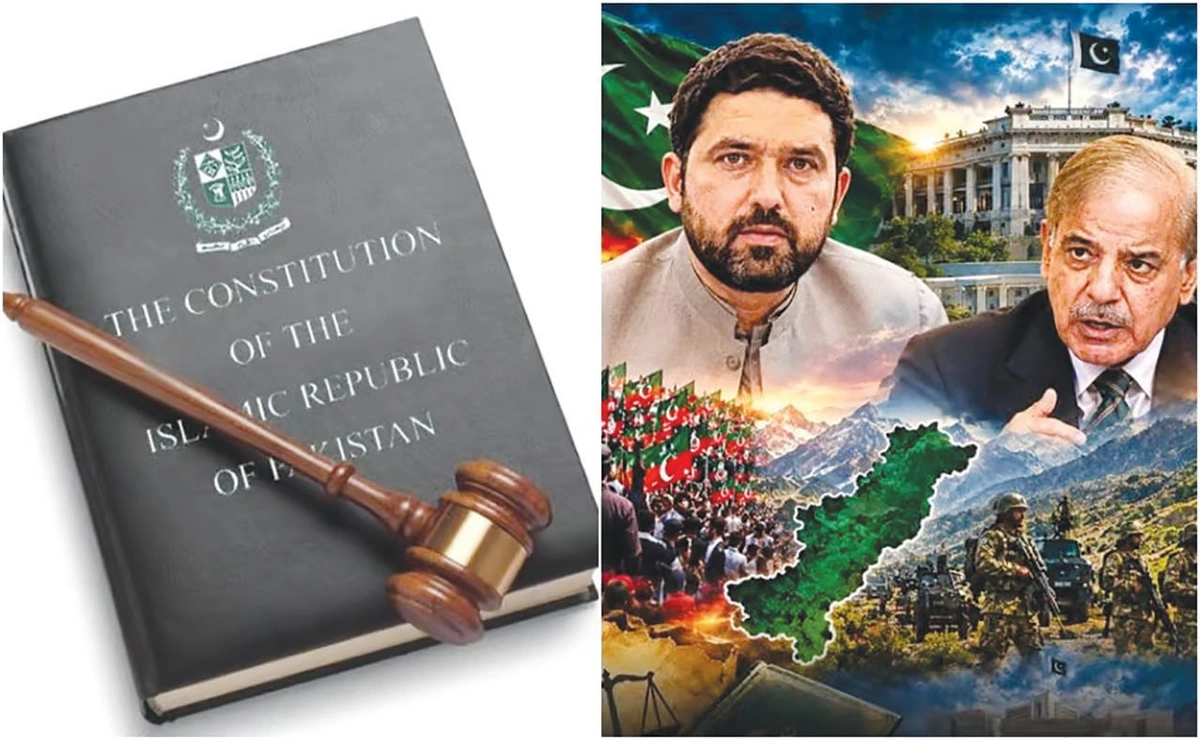
Constitutional Authority, Public Safety and the Imperative of Stability in Khyber Pakhtunkhwa
By Sheikh Abdul Razzaq
The situation in Khyber Pakhtunkhwa demands a serious national debate on the relationship between constitutional authority, public safety and the responsibilities of elected governments. Where persistent security challenges threaten the lives of citizens, disrupt economic activity and undermine public confidence in state institutions, the question of extraordinary constitutional measures inevitably arises. Such measures, however, must be assessed against the Constitution, the law and the public interest.
The President’s reported action concerning the provincial government of Khyber Pakhtunkhwa represents a significant constitutional development. Its justification must rest on verifiable facts, the applicable constitutional provisions and the necessity of protecting citizens from threats to peace and stability. If the prescribed legal conditions have been fulfilled, the exercise of constitutional authority should be viewed within the framework of the state’s responsibility to safeguard public order and ensure the effective functioning of institutions.
Security is not merely an administrative concern; it is a fundamental prerequisite for the exercise of democratic rights. Citizens cannot fully benefit from political freedoms, educational opportunities, healthcare or economic development when fear and insecurity dominate their daily lives. Terrorism and militant violence impose a particularly heavy burden on communities already struggling with poverty, unemployment and limited public services.
An elected government carries a responsibility that extends beyond political representation. It must demonstrate administrative capacity, maintain effective coordination with law-enforcement agencies and ensure that public institutions function in accordance with the law. When serious governance failures are established, constitutional mechanisms exist to address extraordinary circumstances. Their use must nevertheless be based on evidence, legal necessity and clearly defined objectives rather than political disagreement alone.
At the same time, constitutional intervention cannot be treated as a substitute for long-term governance. Sustainable peace requires intelligence-led counterterrorism operations, professional policing, stronger prosecution, protection of vulnerable communities and effective coordination between federal and provincial institutions. It also requires investment in education, employment, healthcare and infrastructure, particularly in areas exposed to militancy and economic deprivation.
The people of Khyber Pakhtunkhwa have endured enormous sacrifices in the struggle against terrorism. Their security and dignity must remain central to every political and administrative decision. Any extraordinary measure should therefore include transparent oversight, respect for fundamental rights, protection of essential public services and a clear pathway towards the restoration of normal constitutional governance.
Political parties must also recognise that national security cannot be reduced to partisan competition. The government and opposition may disagree over policies and political priorities, but these differences should be resolved through constitutional forums, parliamentary debate and judicial review. Allegations of administrative failure must be examined objectively, while claims of political victimisation must also be addressed through lawful procedures.
Ultimately, the legitimacy of any presidential action depends not simply on the authority invoked but on its constitutional validity, necessity, proportionality and implementation. If undertaken lawfully and in the genuine interest of public safety, exceptional measures can serve as a means of addressing a serious crisis. Their success, however, must be judged by measurable improvements in security, institutional accountability and public confidence.
Pakistan needs stability, but stability must be built on constitutionalism, effective governance and the protection of citizens’ rights. The objective should be clear: a peaceful Khyber Pakhtunkhwa where the state fulfils its responsibilities, democratic institutions remain credible and every citizen can live without fear.