
Reconciliation Over Revenge: A Path to Lasting Peace in Balochistan
By Rakhshanda Saba
The peaceful resolution of tribal disputes remains essential to building a stable, prosperous and harmonious society in Balochistan. In a province where tribal traditions continue to shape social relationships, local leadership can play a significant role in resolving longstanding rivalries, preventing bloodshed and encouraging communities to pursue dialogue rather than confrontation.
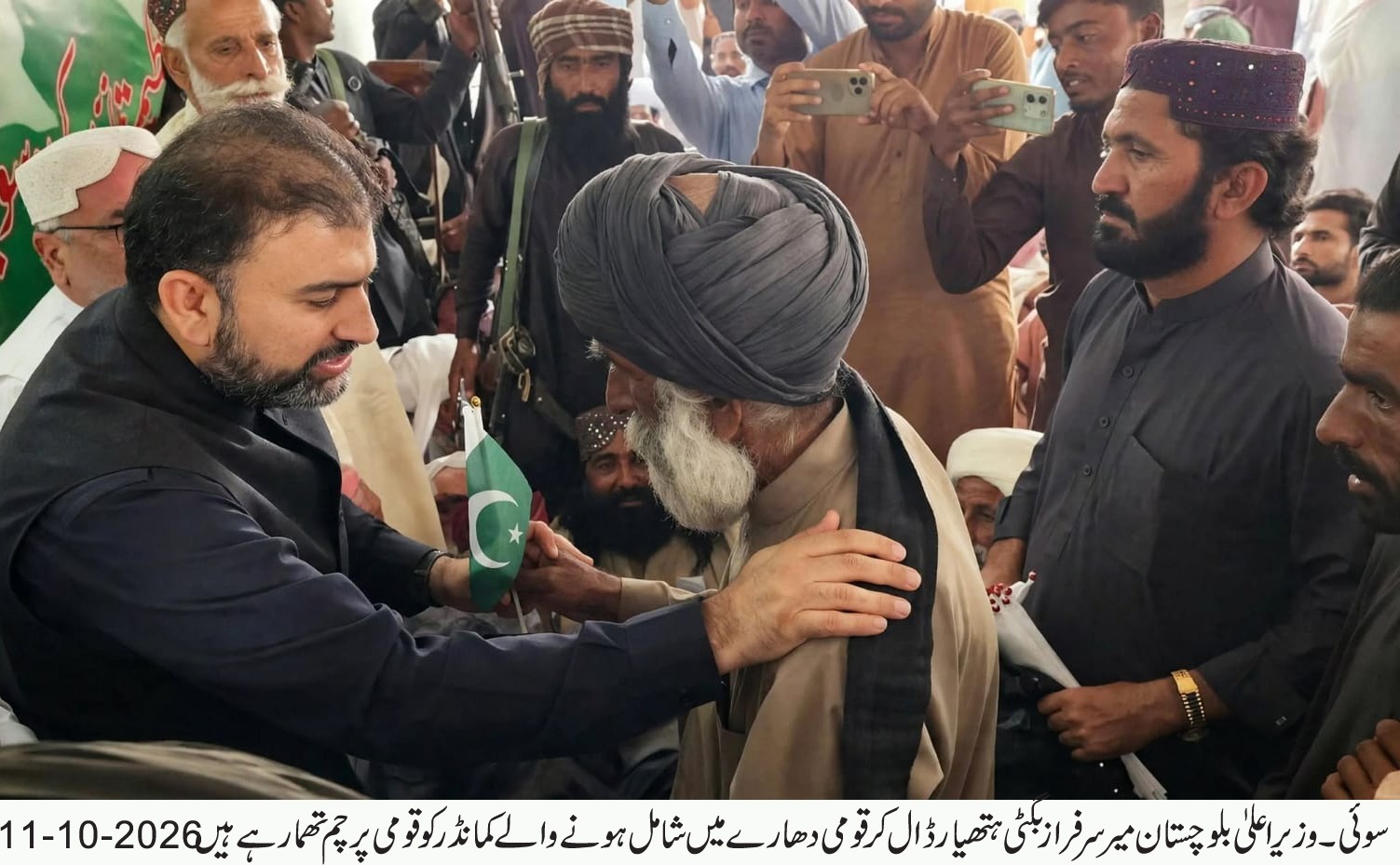
The resolution of the bloody dispute between Shah Ali Karcho and Jumma Karcho in Sui on Sunday, facilitated by Balochistan Chief Minister and Chief of the Bugti tribe, Mir Sarfraz Ahmed Bugti, highlights the importance of reconciliation in addressing tribal conflicts. The settlement, which included a fine of Rs100 million imposed on Shah Ali Karcho, represents an effort to bring an end to a dispute that had threatened peace and harmony between the parties.
Tribal disputes, when left unresolved, can extend far beyond the individuals directly involved. Their consequences often affect entire families, divide communities and create cycles of retaliation that may continue across generations. The loss of human lives, disruption of livelihoods and erosion of mutual trust can leave lasting scars on the social fabric. Resolving such conflicts through dialogue and mutually understood arrangements is therefore not merely a local achievement; it is an important step towards broader social stability.
Balochistan’s traditional structures of tribal leadership have historically played a role in mediation and reconciliation. When exercised responsibly, this influence can help bring conflicting parties to the negotiating table and create opportunities for peaceful settlements. The intervention in Sui demonstrates how local influence can be directed towards ending hostility and encouraging coexistence.
However, sustainable peace requires more than a single reconciliation agreement. The parties involved must honour their commitments, refrain from retaliation and respect the terms of the settlement. Community elders, local administration and relevant authorities can contribute by monitoring the implementation of agreements and helping address any future disagreements before they escalate into violence.
At the same time, tribal reconciliation must complement, rather than replace, the formal justice system. The rule of law, protection of individual rights and access to lawful remedies remain fundamental to a just society. Any settlement involving financial penalties or other obligations should be consistent with applicable law and the rights of all parties. A balanced approach can preserve constructive traditions of mediation while strengthening public confidence in state institutions.
The broader significance of peace in Sui extends to the development prospects of Dera Bugti and other parts of Balochistan. Communities affected by persistent disputes cannot fully benefit from educational opportunities, economic activity, public services and development initiatives. Peaceful relations create an environment in which families can focus on their children’s future, businesses can operate with greater confidence and development projects can deliver lasting benefits.
Chief Minister Mir Sarfraz Bugti’s role in facilitating reconciliation underscores the importance of dialogue, responsibility and social cohesion in conflict resolution. The ultimate measure of success, however, will be whether the settlement produces lasting peace and prevents renewed hostility.
Balochistan’s future depends not only on development projects and economic investment but also on the strength of relationships within its communities. Reconciliation over revenge, dialogue over confrontation and justice over arbitrary force must remain guiding principles.
The message from Sui is clear: lasting peace becomes possible when communities choose coexistence over hostility. Ending tribal rivalries is not simply about closing an old chapter; it is about creating a safer, more united and more hopeful future for the generations to come.