
Editorial
Returning to the National Mainstream: A Victory for Peace and Stability in Balochistan
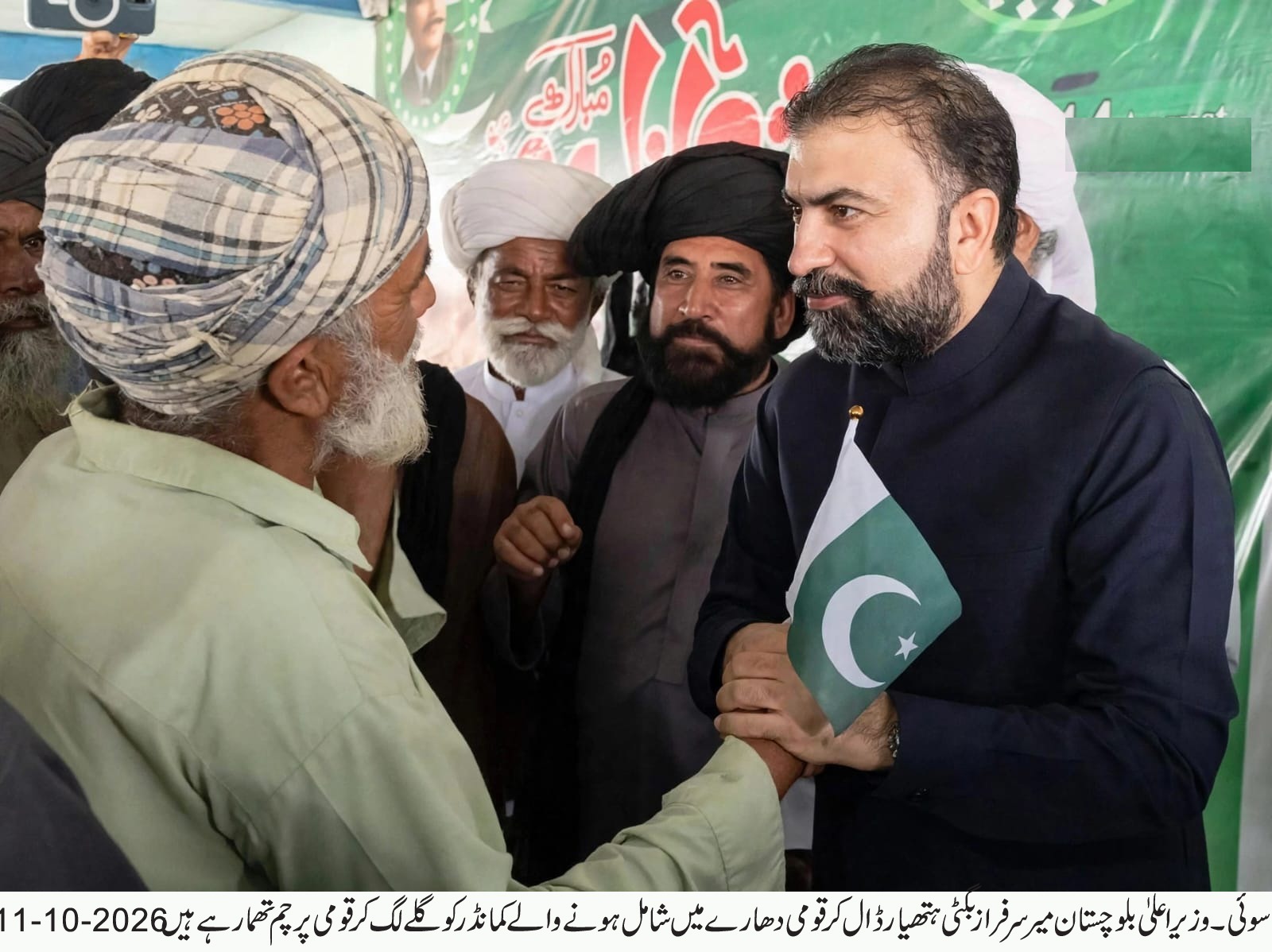
The surrender of fugitive commander Noor Khan Bugti and his associates before Balochistan Chief Minister Mir Sarfraz Bugti at Pakistan House in Sui marks an important opportunity to advance peace, reconciliation and stability in the province. Their decision to abandon armed confrontation and return to the national mainstream underscores a fundamental reality: the future of Balochistan lies in peaceful engagement, constitutional participation and constructive cooperation with the state.
Pakistan’s sovereignty, territorial integrity and constitutional framework are essential pillars of national unity. The state has a responsibility to protect its citizens, uphold the rule of law and create conditions in which every individual can live with dignity and security. Armed conflict, meanwhile, imposes a heavy cost on ordinary people, disrupts education and economic activity, and deprives communities of opportunities for progress.
The decision to surrender and return to civilian life offers a chance to break this cycle of violence. It sends a message that peaceful reconciliation remains possible and that individuals who abandon armed activity can seek a lawful future within society. Chief Minister Mir Sarfraz Bugti’s engagement with those returning to the national mainstream highlights the role that dialogue and political leadership can play alongside legitimate security measures.
However, sustainable reconciliation requires sincerity, responsibility and adherence to the law. Reintegration should proceed through established legal procedures, with appropriate accountability where required and due consideration for the rights of victims. Peace cannot be secured through declarations alone; it must be strengthened through lasting commitments to non-violence and respect for constitutional authority.
Balochistan’s long-term stability also depends on addressing the social and economic challenges confronting its people. Investment in education, healthcare, employment, infrastructure and opportunities for young people is essential to building public confidence and strengthening social cohesion. Citizens must be able to see a future in which progress is achieved through education, enterprise and democratic participation rather than armed confrontation.
The national mainstream should offer equal citizenship, representation and opportunities to all communities. Respect for Balochistan’s cultural identity and traditions can coexist with a shared commitment to Pakistan’s constitutional order. National unity becomes more meaningful when it is supported by responsive governance, justice, inclusion and tangible improvements in people’s lives.
The return of Noor Khan Bugti and his associates should therefore be viewed as an opportunity to advance a broader process of reconciliation. Its lasting value will depend on continued commitment to peace, lawful conduct and constructive participation in society. Other individuals who remain involved in armed activity should also be encouraged to consider peaceful alternatives through credible and lawful channels.
Balochistan does not need another generation to bear the costs of conflict. It needs peace that enables children to attend school, families to live without fear and young people to pursue their ambitions. Every genuine step away from violence and towards lawful civic life strengthens the prospects of stability and development.
The message is clear: peace, constitutional responsibility and national cohesion offer a more sustainable path forward than armed confrontation. The challenge now is to translate reconciliation into lasting peace and ensure that Balochistan’s people can participate fully in a secure, prosperous and united Pakistan.