
Editorial
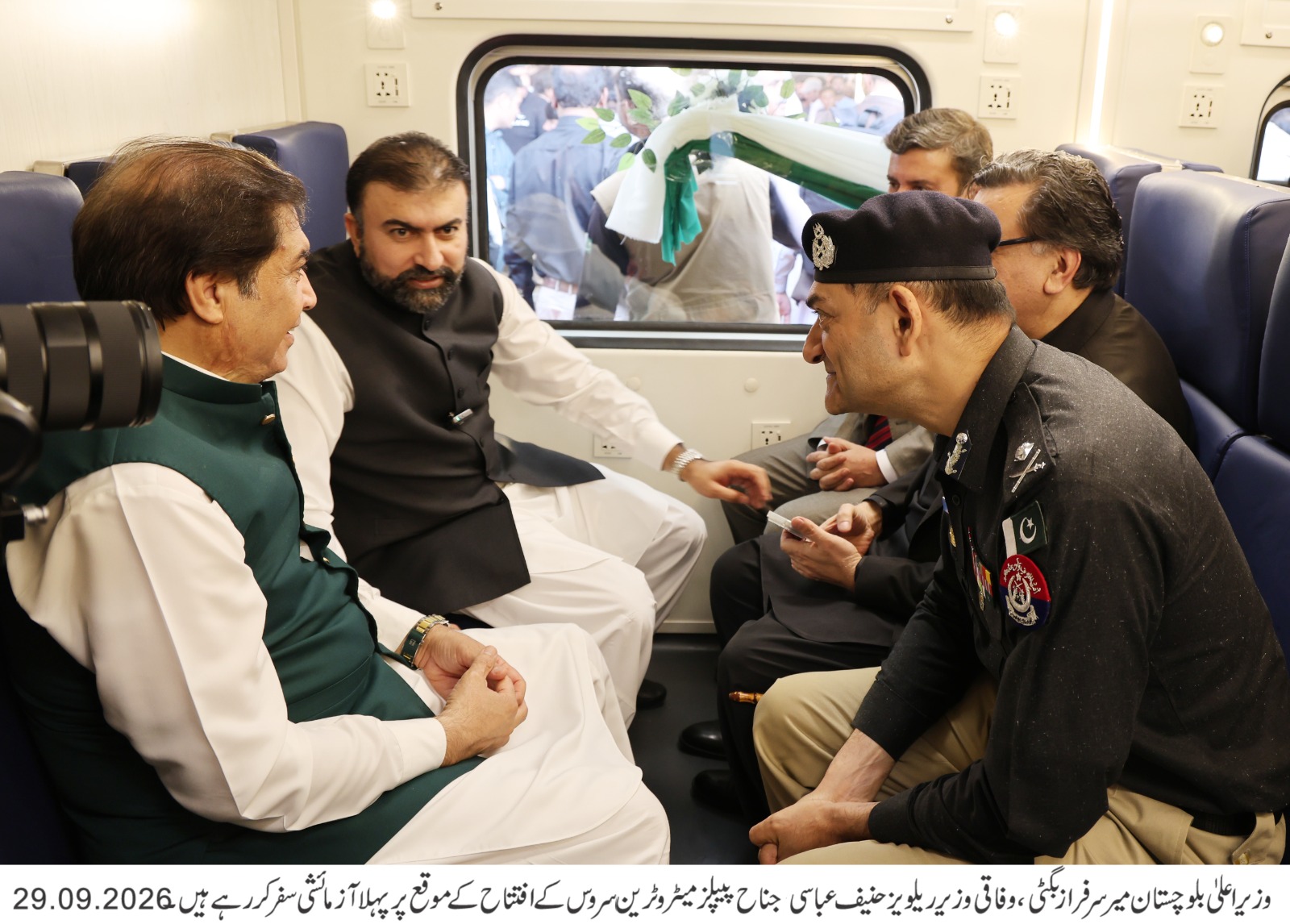
Jinnah Peoples Metro Train: A New Beginning for Urban Mobility in Balochistan
The launch of the Jinnah Peoples Metro Train Service in Quetta marks a significant step towards improving public transportation in Balochistan. The introduction of the province’s first metro train is not merely the addition of another mode of transport; it represents a practical response to the growing mobility needs of a rapidly expanding urban population.
For thousands of citizens who rely on public transport every day, affordable and reliable mobility is directly connected with their access to education, employment, healthcare, markets and other essential services. A well-organized train service can reduce the difficulties faced by commuters and provide them with a safer and more dependable means of travelling across the city and its surrounding areas.
One of the most important features of the service is its focus on affordability and social inclusion. Free travel for senior citizens and persons with disabilities is a welcome step that recognizes the specific mobility needs of vulnerable sections of society. Subsidized fares for other passengers can also reduce the financial burden on low-income families, workers, students and daily commuters.
Public transport is particularly important in a city where increasing private vehicle use contributes to congestion, fuel consumption and pressure on road infrastructure. A functional rail-based transport system can encourage people to shift from private vehicles to public transportation, helping reduce traffic pressure and potentially improving the overall urban environment.
The project also carries an important economic dimension. The decision to utilize locally available capacity for the preparation of coaches and locomotives demonstrates how public-sector institutions can contribute to infrastructure development. Instead of relying entirely on imported equipment, strengthening domestic capabilities can help retain public resources within the country while developing technical expertise and institutional capacity.
The planned expansion of the service makes the initiative even more significant. Extending the railway network towards Bostan and eventually connecting areas including Pishin and Mastung could create a broader transport corridor linking residential communities, educational institutions, commercial centres and industrial areas. Better connectivity with industrial zones could also facilitate the movement of workers and support commercial activity.
For Balochistan, where distances between population centres are often considerable, improved transport connectivity has long-term importance. Efficient rail services can contribute to regional integration by making movement easier and more affordable. They can also provide an alternative to road transportation for people travelling between important population and economic centres.
However, the long-term success of the metro train service will depend on consistent maintenance, punctuality, passenger safety, cleanliness, accessibility and transparent management. Affordable fares will remain equally important if the service is to serve the people for whom it has been introduced.
The Jinnah Peoples Metro Train should therefore be seen as an investment in people rather than simply an infrastructure project. Its greatest value will be measured not by the inauguration ceremony but by the difference it makes in the daily lives of ordinary citizens.
If properly maintained and gradually expanded, the service can become a foundation for a more efficient, inclusive and sustainable public transport system in Balochistan. It can also demonstrate that modern transportation facilities are not limited to Pakistan’s largest metropolitan centres but can be developed according to the needs and potential of other provinces and cities as well.