
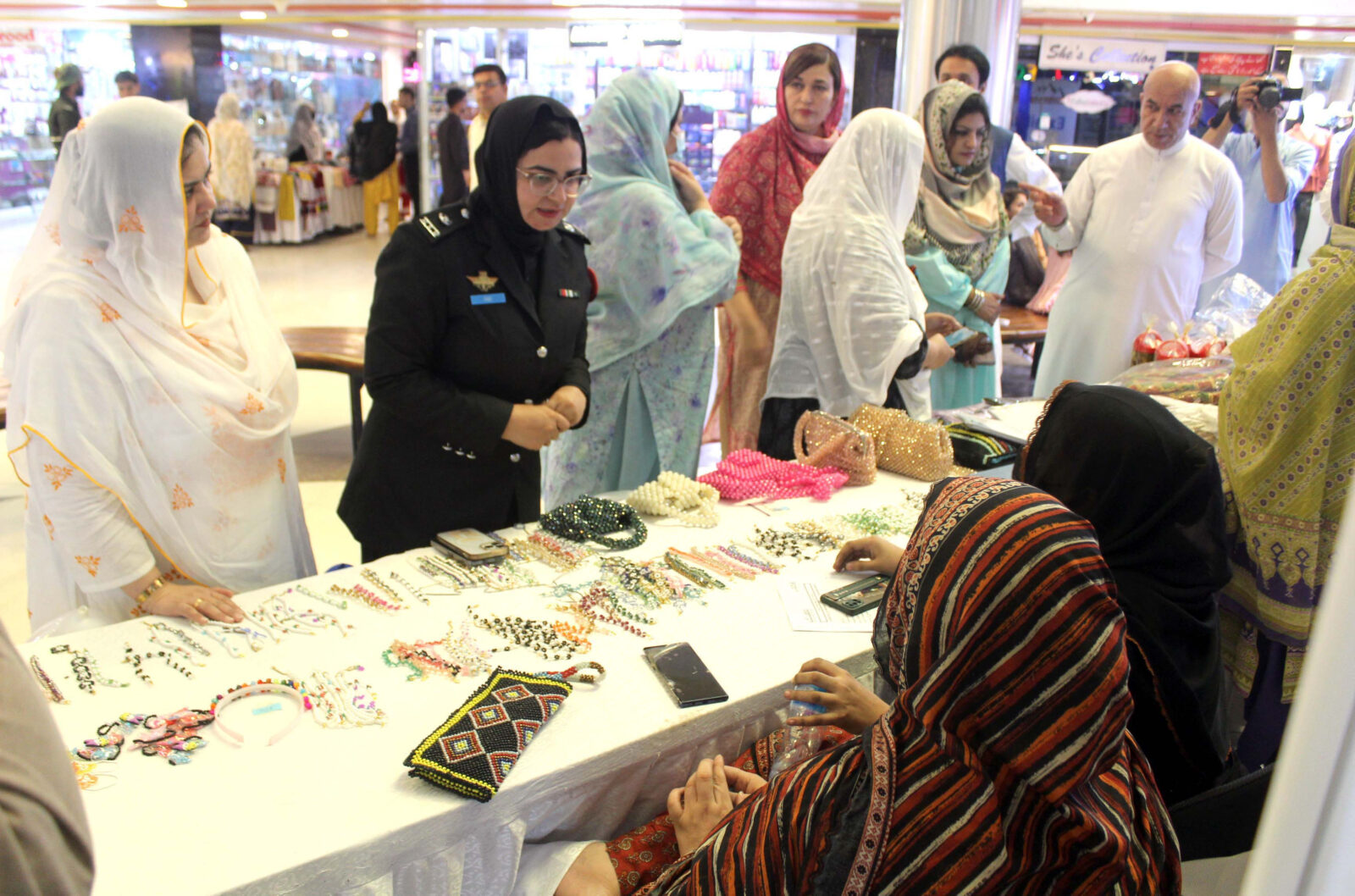
Empowering Women for a Stronger Balochistan
By Rakhshanda Saba
The economic empowerment of women is increasingly being recognised as an essential component of sustainable development, and Balochistan is taking important steps towards creating greater opportunities for women to participate in economic and social life. In a province where women have traditionally faced geographical, social and economic barriers, targeted public initiatives can help transform their potential into productive opportunities.
One of the key areas of focus is skills development. Providing women with market-oriented training can enable them to acquire practical skills that can be converted into employment, entrepreneurship and household income. Training programmes in areas such as handicrafts, information technology, food processing, tailoring, beauty services and other trades can help women build independent sources of income while contributing to the local economy.
Economic empowerment, however, goes beyond vocational training. Women also need access to finance, markets, technology and business support. Government initiatives aimed at supporting women-led businesses can help bridge this gap by providing opportunities for trained women to establish or expand small enterprises. Even modest financial assistance can make a meaningful difference when it is combined with proper training, mentoring and market access.
In this regard, programmes designed to support women entrepreneurs in Balochistan have the potential to create a wider economic impact. When a woman establishes a small business, the benefits often extend beyond her individual income. Her enterprise can create employment, support local supply chains and contribute to the financial stability of her family.
The provincial government’s efforts to train women and facilitate entrepreneurship therefore represent an investment in human capital. Initiatives under the Women Development Department, including skills development and support for women seeking to establish businesses, can provide a foundation for greater economic participation. Such programmes become more effective when they are linked with market demand and accompanied by mechanisms for follow-up and sustainability.
Technology is another important avenue for expanding economic opportunities. Digital platforms can enable women to market products beyond their immediate communities, acquire new skills through online learning and explore forms of work that do not always require relocation. For women living in remote parts of Balochistan, digital connectivity can therefore reduce some of the geographical limitations that have historically restricted access to economic opportunities.
At the same time, women’s economic empowerment should be supported by a broader environment that encourages education, mobility, workplace participation and entrepreneurship. Government departments, educational institutions, private businesses and civil society all have a role to play in creating such an environment.
The objective should not simply be to increase the number of women participating in individual programmes. The greater goal should be to create sustainable economic pathways through which women can develop skills, earn income, establish businesses and contribute to decision-making within their families and communities.
Balochistan possesses a large pool of talented and capable women. Providing them with the right skills, resources and opportunities can turn this human potential into an important force for economic development.
Women’s economic empowerment is therefore not only a question of social inclusion. It is also an economic necessity. A Balochistan in which women can participate meaningfully in economic activity will have greater opportunities to build resilient families, stronger communities and a more diversified provincial economy.