
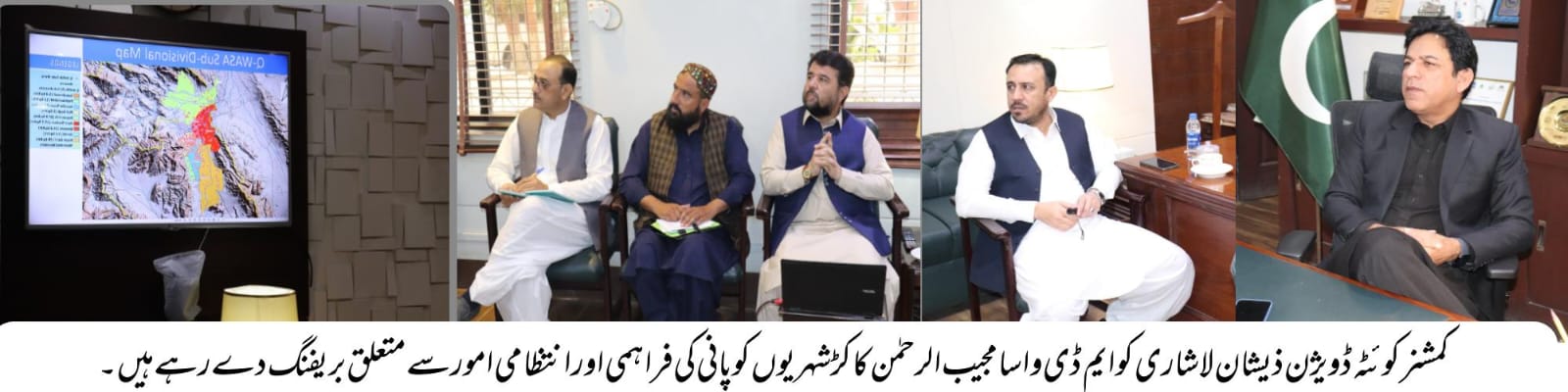
Commissioner reviews water supply and WASA performance in Quetta
Quetta, Commissioner Quetta Division Zeeshan Lashari chaired a meeting to review the city’s water supply situation, the performance of the Water and Sanitation Authority (WASA), and related administrative matters. The meeting was attended by WASA Managing Director Mujeeb‑ur‑Rehman Kakar and other officials.
During the briefing, the MD informed the Commissioner that Quetta has a total of 544 WASA tube wells, of which 387 are functional while 167 remain non‑operational due to lack of funds for repair. He explained that WASA supplies water through two zones — Chiltan Zone and Zarghoon Zone — but the demand far exceeds supply. The city requires approximately 60 million gallons of water daily, while WASA currently provides only 31 million gallons, with the shortfall largely met by private tube wells.
Officials reported that Quetta also has around 998 agricultural tube wells and nearly 1,400 commercial tube wells, many of which are unregistered. WASA faces financial challenges in maintaining its infrastructure, paying staff salaries, electricity bills, and carrying out essential repairs.
The briefing highlighted that Quetta has over 97,000 domestic and commercial consumers, generating about Rs. 240 million annually in revenue. However, WASA’s expenditures exceed Rs. 4.64 billion, against a provincial budget allocation of Rs. 3.705 billion, leaving the authority in deficit. Water supply in parts of Sariab has also been affected due to the closure of the Dashtwal field.
Commissioner Zeeshan Lashari directed officials to take all possible measures to ensure uninterrupted water supply to citizens. He emphasized the urgent need to rehabilitate non‑functional tube wells and utilize available resources more effectively. He further instructed WASA to prepare comprehensive proposals for converting tube wells to solar energy, reducing electricity costs and making the water supply system more sustainable.
The Commissioner stressed that resolving WASA’s administrative and financial challenges requires long‑term planning, with special focus on rehabilitating tube wells and adopting alternative energy solutions to ensure reliable water supply for Quetta’s residents.