
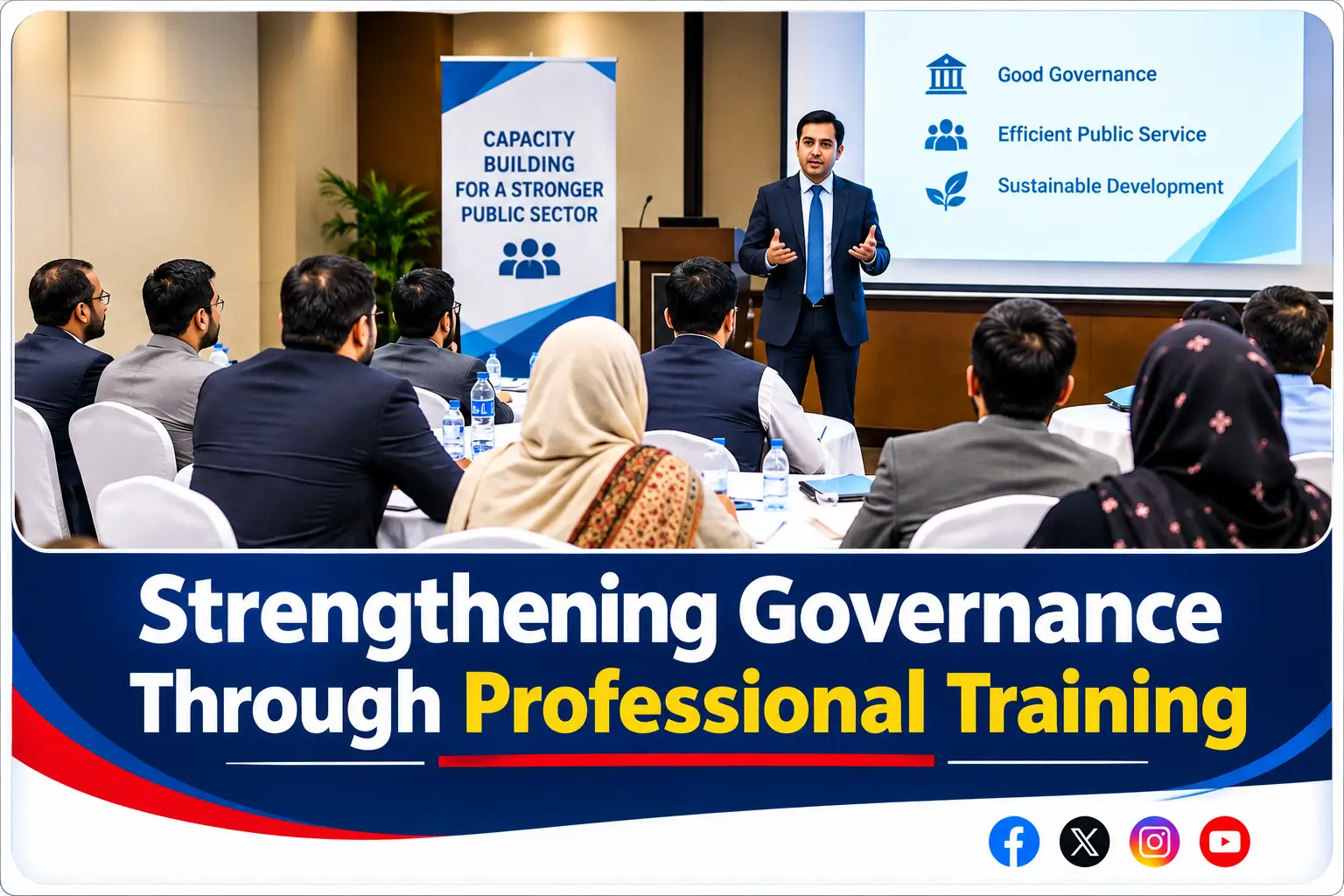
Strengthening Governance Through Professional Training
By Rakhshanda Saba
The Balochistan Civil Services Academy (BCSA), Quetta, has taken another significant step towards strengthening the professional capacity of government officers by approving a series of new training programmes designed to meet the evolving demands of public administration and governance.
The decision was taken during the 8th meeting of the Ad-hoc Curriculum Committee of the BCSA, chaired by Director General Dr. Hafeez Ahmed Jamali. The meeting brought together senior government officials, education experts and representatives of relevant departments to deliberate on the training needs of officers serving in different areas of the provincial administration.
The committee reviewed and approved several professional development programmes targeting officers with diverse administrative, technical and operational responsibilities. Among the approved initiatives is a 12-week training programme for engineers and sub-divisional officers serving in the Communication, Construction, Physical Planning and Housing departments. The programme is expected to help participants strengthen their technical and administrative capabilities while enabling them to respond more effectively to the practical challenges associated with public-sector development and service delivery.
An 8-week training programme was also approved for superintendents and office coordinators of the Services and General Administration Department. Since these officials play an important role in the day-to-day functioning of government offices, enhancing their administrative, organizational and digital skills can contribute significantly to improving institutional efficiency and workflow.
A particularly important development is the approval of the first pre-service training programme for assistant commissioners and section officers. These positions carry considerable administrative responsibilities and require officers to possess a sound understanding of government procedures, public policy, field administration, coordination and decision-making. Structured training at the beginning of their careers can therefore help establish strong professional foundations and prepare officers for the complex responsibilities of public service.
The committee meeting was attended by Dosteen Khan Jamaldini, Abdullah Khan, Dr. Javed Anwar Shahwani, Dr. Faisal Khan, Syed Ghaus Ali Shah, Rahmatullah Changazi and Nazar Muhammad Kakar. Muhammad Rafiq Raisani, Muhammad Rafiq and Dr. Ali Nawaz Baloch participated as special invitees.
The importance of such programmes goes beyond conventional professional training. Public administration is changing rapidly as governments increasingly rely on digital systems, data-driven decision-making, modern management practices and transparent institutional mechanisms. Officers are consequently required to develop a combination of professional, administrative, technical and digital skills to perform their responsibilities effectively.
For Balochistan, where governance challenges are often linked with geographical, institutional and developmental complexities, investment in human capital within the public sector can have a direct impact on the quality of service delivery. Well-trained officers are better positioned to understand policy objectives, implement government decisions, coordinate between departments and respond to citizens’ needs in a timely and professional manner.
The BCSA’s latest initiative reflects a broader recognition that effective governance depends not only on policies and institutions but also on the capacity of the people responsible for implementing them.
By expanding structured training opportunities and updating professional standards, the academy can play an important role in developing a more capable, accountable and responsive civil service. The emphasis on modern skills also signals the need for continuous learning rather than one-time professional development.
The BCSA has reaffirmed its commitment to enhancing the capacity of government officers, raising professional standards and promoting effective governance across Balochistan. Such efforts, if sustained and regularly evaluated, can contribute to building a public administration that is more efficient, transparent and responsive to the changing needs of the province and its people.