
Editorial
Balochistan’s Resolve for Peace and Stability
Balochistan’s security challenges are complex, persistent and deeply interconnected with the province’s vast geography, difficult terrain and socio-economic realities. In such circumstances, maintaining peace requires more than conventional policing. It demands political resolve, institutional coordination, modern technology, professional law enforcement and sustained engagement with communities. The Government of Balochistan has increasingly focused on these areas to strengthen the province’s security architecture and protect the lives and property of its people.
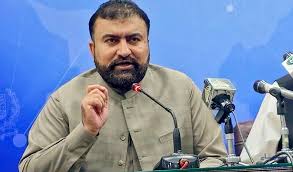
Under the leadership of Chief Minister Mir Sarfraz Bugti, the provincial government has adopted a multi-dimensional approach towards improving law and order. The emphasis is not only on responding to incidents but also on strengthening the capacity of institutions to prevent crime and detect threats before they can cause harm. This shift towards proactive policing represents an important step in addressing the evolving nature of security challenges.
Technology has emerged as a central component of this strategy. The Balochistan Police is being equipped with modern digital tools designed to improve operational efficiency, accountability and public service delivery. Digital applications, improved communication systems, surveillance mechanisms and technology-based policing are helping law enforcement agencies make better use of information and respond more effectively to emerging threats.
The expansion and strengthening of Safe City initiatives is another significant development. Modern surveillance and evidence-based policing can provide law enforcement agencies with valuable information for crime prevention, investigation and identification of suspects. Such systems also strengthen institutional accountability by creating reliable records of incidents and police responses.
The provincial government has also placed considerable emphasis on improving police mobility and field operations. Modern patrolling systems and better-equipped personnel enable law enforcement agencies to maintain a stronger presence on roads, in urban centres and at vulnerable locations. Effective patrolling is particularly important in a province as geographically expansive as Balochistan, where conventional policing methods alone cannot meet every security requirement.
At the same time, the government’s approach recognises that security is a shared responsibility. Effective coordination among the civil administration, police, intelligence agencies and other law enforcement institutions is essential for timely information-sharing and coordinated responses. The cooperation between civil and military leadership in confronting terrorism has also remained an important element of the province’s overall security framework.
However, sustainable peace cannot be achieved through security measures alone. Development, education, employment opportunities, access to justice and public confidence in state institutions are equally important. A citizen who trusts the police, can access justice and sees a functioning state around him is less vulnerable to criminal networks and extremist narratives.
The real test of any security policy is therefore not merely the number of operations conducted, but whether ordinary citizens feel safer in their homes, markets, workplaces and on public roads. Balochistan needs a security model that combines firmness against terrorism and organised crime with professionalism, accountability and respect for citizens’ rights.
The provincial government’s ongoing efforts indicate a recognition of this broader reality. By investing in modern policing, strengthening institutional coordination and improving the use of technology, Balochistan is moving towards a more responsive and intelligence-led security system.
Peace in Balochistan will ultimately be secured through consistency, institutional strength and public trust. The road remains challenging, but a determined government, professional law enforcement agencies and an engaged citizenry can collectively build a safer and more stable Balochistan.