
Standing Committee reviews Balochistan Public Health Engineering Bill 2026
Proposes regulating groundwater extraction, protecting water resources, establishing a Provincial Groundwater Regulatory Board
Quetta, The Standing Committee on Public Health Engineering of the Balochistan Assembly expressed concerns over the declining groundwater levels in Quetta and other parts of the province, stressed urgent measures to regulate private bore usage and prevent further depletion of valuable water reserves.
The committee meeting convened at the Assembly Secretariat to deliberate on the Balochistan Public Health Engineering Bill, 2026 (Bill No. 20 of 2026).
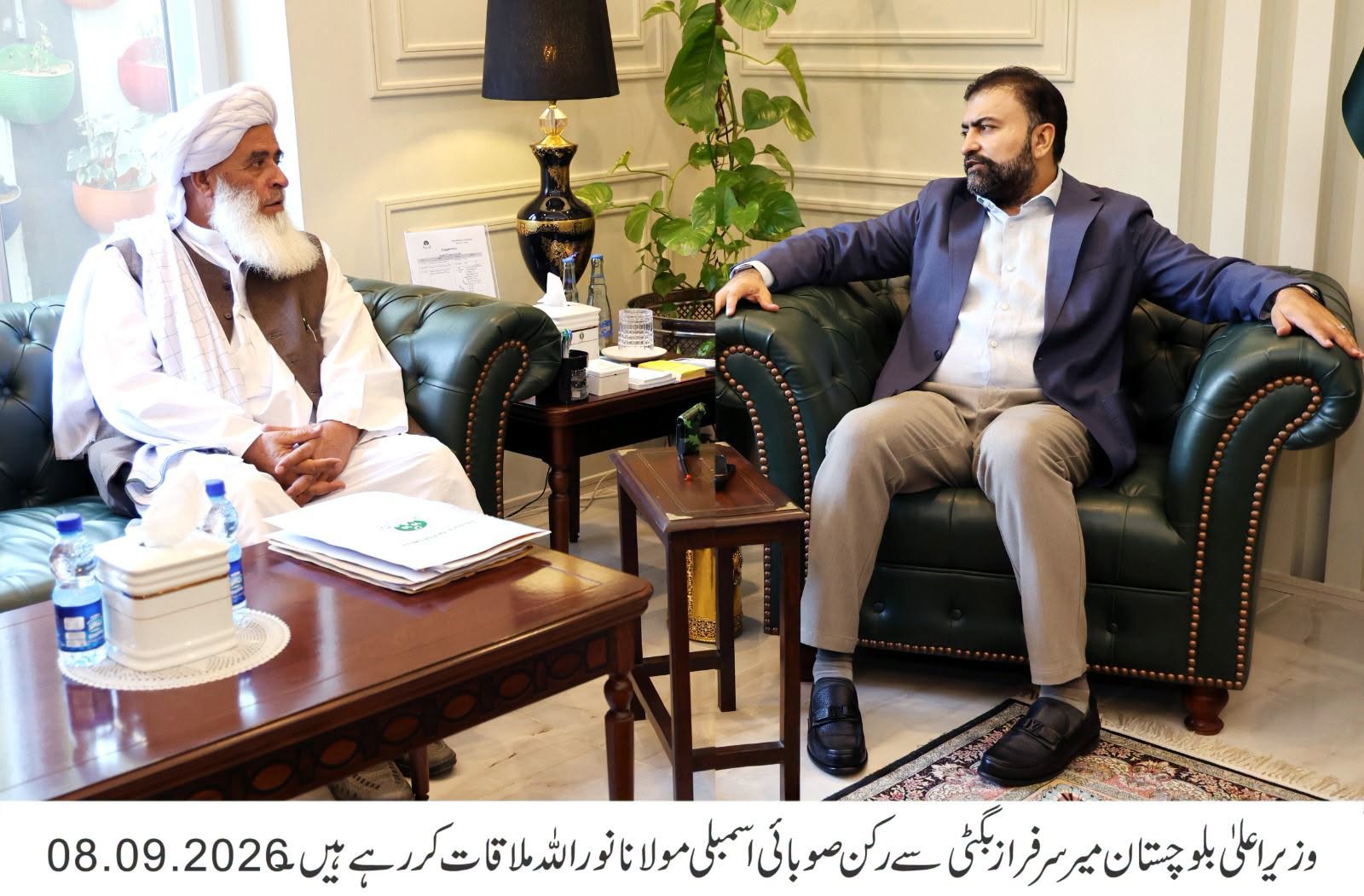
During the meeting, Maulana Noorullah was unanimously elected as Chairman of the committee and subsequently presided over the session. Committee members Maulana Hidayat-ur-Rehman and Shahida Rauf participated, along with Assembly Secretary Tahir Shah Kakar, Special Secretary Abdul Rahman, Additional Secretary Law Saeed Iqbal, officials from the Public Health Engineering Department, and Secretariat staff.
The bill seeks to establish a comprehensive legal framework for the provision of clean drinking water, sewerage, wastewater management, and regulatory oversight across Balochistan.
Key proposals include defining departmental responsibilities, regulating groundwater extraction, protecting water resources, establishing a Provincial Groundwater Regulatory Board and District Water Supply and Sanitation Groups, ensuring effective operation of rural and urban water schemes, wastewater treatment, safe reuse of treated water, and introducing structured systems for water tariffs, billing, and recovery.
The Committee members stressed that accountability must extend beyond the public to include government officers and officials, with clear penalties for failure to perform duties. They suggested incorporating provisions under the Balochistan Employees Discipline Act (BEDA) 2011 to ensure enforcement.
Chairman Maulana Noorullah opposed the bill, stating that in his view it was against public interest, and emphasized that the committee’s role is to safeguard the rights and welfare of the people.
Maulana Hidayat-ur-Rehman also underscored that elected representatives cannot support any measure detrimental to public welfare, questioning the performance of institutions such as WASA Quetta and calling for transparency and efficient use of public resources.
Members concluded that legislation on water, a basic necessity must prioritize public interest, transparency, institutional accountability, and protection of natural resources.