
Editorial
Merit Must Remain the Foundation of Public Recruitment in Balochistan
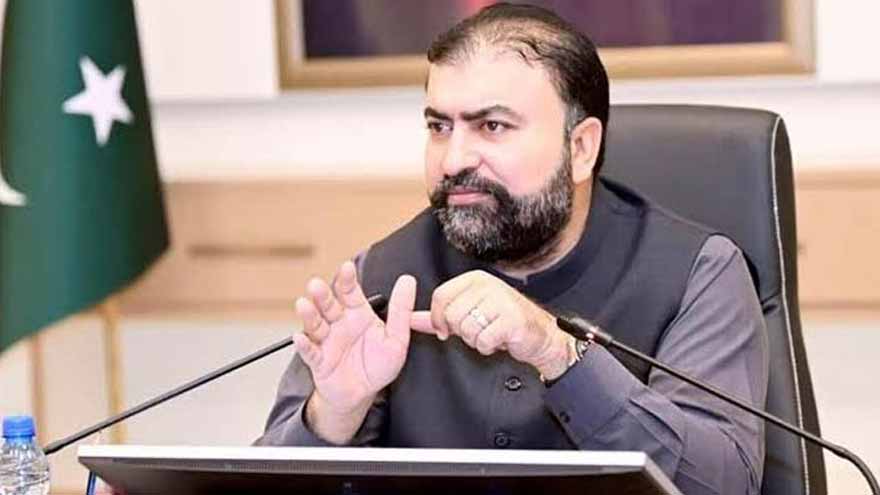
The decision of Balochistan Chief Minister Mir Sarfraz Bugti to constitute a high-level committee to investigate the matter concerning the posts of Tehsildars advertised through the Balochistan Public Service Commission (BPSC) is an important step towards protecting the principles of merit, transparency and institutional credibility.
The committee has been directed to submit its report to the Chief Minister within ten days. The relatively short timeframe sends an important message: matters concerning public recruitment, particularly those involving thousands of young people competing for limited government positions, cannot be allowed to remain surrounded by uncertainty or unanswered questions.
Public-sector recruitment is far more than an administrative exercise. For many young people in Balochistan, government employment represents an important avenue for professional stability, social mobility and economic independence. When a recruitment process is perceived to be fair, candidates who succeed can take pride in having earned their positions through merit. Conversely, any doubt about transparency can undermine confidence not only in a particular recruitment process but in public institutions as a whole.
This is why the Chief Minister’s stated position that there will be no compromise on merit, transparency and the rights of young people deserves particular attention.
The role of the BPSC is central to maintaining public confidence in recruitment. As an institution responsible for competitive examinations and selections for various government posts, its credibility depends upon the perception that every eligible candidate receives an equal opportunity and that recruitment decisions are based on clearly defined and consistently applied criteria.
The Tehsildar recruitment issue should therefore be examined objectively and comprehensively. The purpose of an investigation should not be to prejudge any individual, department or institution, but to establish the facts. If the recruitment process has been conducted in accordance with the rules, the findings should make that clear. If shortcomings or irregularities are identified, appropriate corrective measures should follow.
Such an approach is in the wider public interest because transparency is strengthened not merely when wrongdoing is identified, but also when legitimate processes are independently examined and their integrity is demonstrated.
Balochistan has a particularly large young population, and the aspirations of its youth are closely connected with the province’s future. Every year, thousands of educated young people invest considerable time and resources in preparing for competitive examinations. They deserve a recruitment environment in which qualifications, performance and merit remain the decisive factors.
The government, therefore, has a responsibility to ensure that recruitment processes are not only fair but are also demonstrably fair. Transparency should be visible at every stage—from the advertisement of vacancies and eligibility criteria to examinations, evaluation, scrutiny, interviews and final recommendations.
At the same time, institutions must be allowed to perform their statutory responsibilities without unnecessary political or administrative interference. The strength of a merit-based system lies in the independence and professionalism of the institutions responsible for implementing it. Any investigation should consequently reinforce institutional procedures rather than weaken them.
The Chief Minister’s decision to seek a report within ten days also provides an opportunity to establish a clear precedent for handling similar concerns in the future. A timely, fact-based and transparent review can help resolve the immediate issue while also identifying any procedural gaps that may require improvement.
There is another important dimension to the matter: public trust. In an era when information spreads rapidly through social media, rumours and allegations can quickly create confusion. The most effective response to such uncertainty is neither silence nor speculation. It is credible information based on facts, rules and documented findings.
The committee’s report can therefore play an important role in restoring clarity. Its findings should ideally explain what happened, whether established procedures were followed, and what measures, if any, are required to address identified shortcomings.
For the youth of Balochistan, the message should be unequivocal: their future must not depend upon connections, influence or privilege. It should depend upon their abilities, qualifications and performance.
Merit-based recruitment is not merely a matter of administrative fairness; it is an essential component of good governance. When competent individuals are selected through transparent processes, public institutions become stronger and citizens develop greater confidence in the state.
The Tehsildar recruitment controversy, therefore, should be treated as an opportunity rather than merely a challenge. If the investigation is conducted objectively and its findings are made clear, it can strengthen confidence in the recruitment system and demonstrate that concerns raised by young people are taken seriously.
Ultimately, the credibility of government employment rests on one simple principle: every deserving candidate must have a fair chance, and every successful candidate must be able to demonstrate that the position was earned on merit.
Chief Minister Mir Sarfraz Bugti’s assertion that there will be no compromise on merit, transparency and the rights of young people is therefore not simply a political statement. It should serve as a guiding principle for the entire public recruitment system of Balochistan.
A province aspiring to build a capable, professional and accountable public sector cannot afford to compromise on merit. Its young people deserve nothing less.