
Women Officers in the Balochistan Revenue Authority: A Journey Towards Women’s Economic Empowerment
- By Rakhshanda Saba
The appointment of talented women officers to the Balochistan Revenue Authority (BRA) marks an important development in the province’s journey towards women’s economic empowerment. At a time when Balochistan is seeking stronger institutions, broader economic participation and greater opportunities for its young population, the inclusion of qualified women in a key economic institution sends a powerful message: women are not merely beneficiaries of economic development; they are essential partners in creating it.
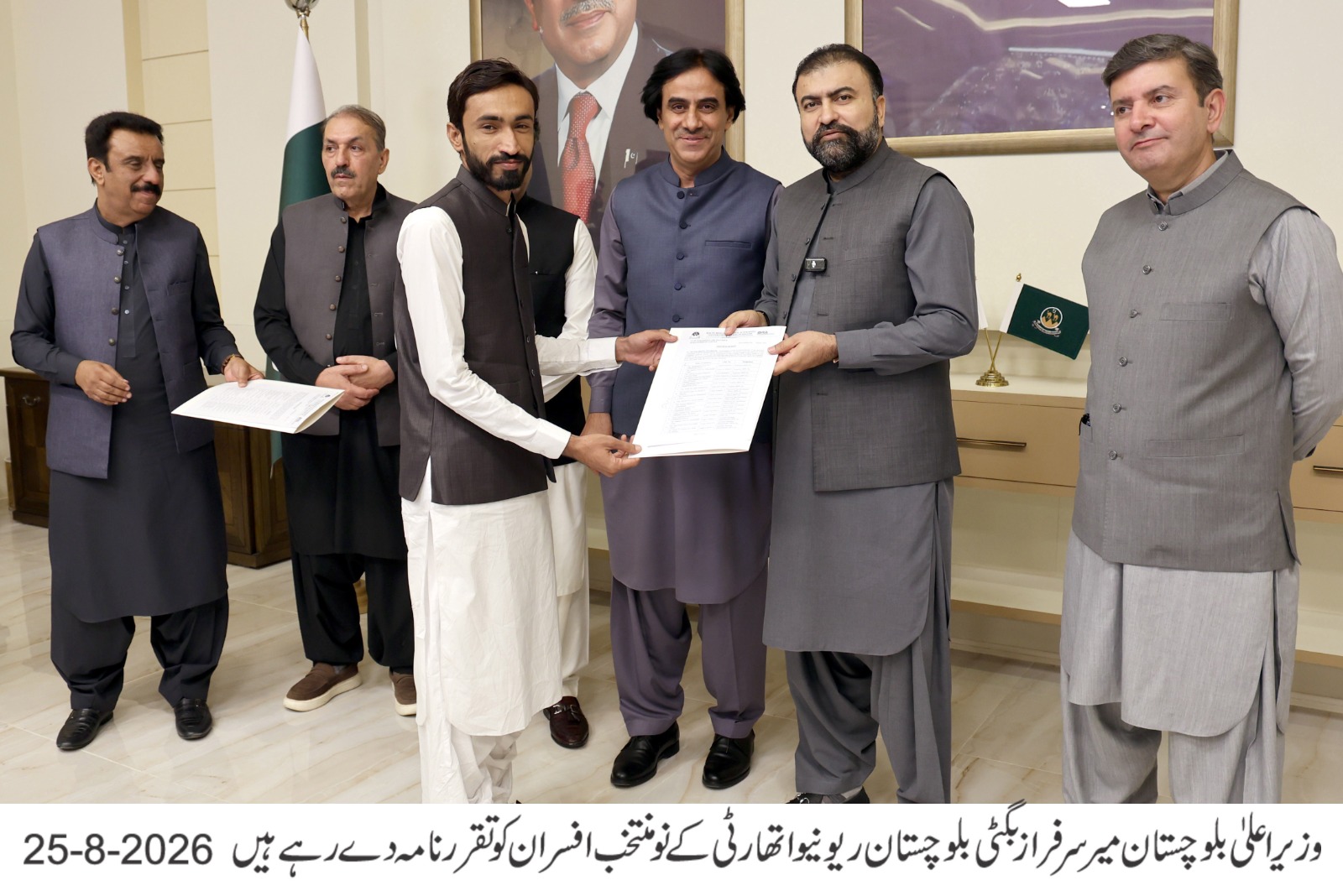
The recruitment of 19 officers to the Balochistan Revenue Authority through the Higher Education Commission, on the basis of merit, represents more than a routine exercise in public-sector appointments. It reflects an approach in which qualification, competence and professional ability are given priority. The selection of women among these officers is particularly encouraging because meaningful economic empowerment begins when women have access to education, employment, professional responsibility and decision-making positions.
For Balochistan, this opportunity carries special significance. The province has a large pool of educated and talented young women whose potential remains underutilised. Geographic, social and economic challenges have historically limited opportunities for many women to enter the formal workforce. Every merit-based appointment that brings a qualified woman into a professional institution therefore contributes not only to her individual progress but also to the broader development of society.
The Revenue Authority is an institution directly connected with the province’s economic future. Its responsibilities involve revenue mobilisation, strengthening tax administration, improving compliance and creating a more efficient fiscal system. The participation of women in such an institution can broaden the professional outlook of the organisation and contribute to a more inclusive administrative culture.
Women’s economic empowerment should not be understood simply as giving women jobs. Genuine empowerment means enabling women to earn, manage resources, make professional decisions and participate meaningfully in institutions that shape economic policy and public finances. A woman who enters a professional institution through merit becomes an example for younger girls who may otherwise believe that certain careers or public responsibilities are beyond their reach.
The appointment of women officers also challenges outdated assumptions about women’s role in the workplace. Modern economies cannot afford to exclude qualified women from important institutions. Countries and regions that make better use of their female human capital generally create stronger and more diverse economies. Balochistan, with its vast natural resources and economic potential, similarly needs to utilise every segment of its educated workforce.
The merit-based nature of these appointments makes the development even more significant. Women do not need special treatment when the system itself provides equal opportunity. What they need is a transparent environment in which qualification, competence and performance determine success. A merit-based system allows women to compete on equal terms and ensures that their professional achievements are recognised on the basis of ability.
This also has a wider social impact. When a young woman secures a professional position through her education and hard work, her success influences her family and community. She becomes a role model for younger generations. Her income can improve household stability, while her professional experience can increase her participation in social and economic decision-making.
The Balochistan government’s emphasis on merit therefore has implications far beyond recruitment. If consistently implemented, it can help create a new relationship between young people and the state. Young women, in particular, need to see public institutions as spaces where their education and talent can translate into meaningful careers.
However, recruitment is only the first step. Women officers must also receive equal opportunities for professional training, career advancement and leadership positions. Institutional policies should ensure safe and supportive workplaces, transparent promotion mechanisms and equal access to professional development. The objective should not merely be to increase the number of women employees but to enable them to progress into positions of greater responsibility.
The Balochistan Revenue Authority can become an important example in this regard. If its newly appointed women officers are provided with the necessary institutional support and opportunities, they can contribute significantly to improving revenue administration and strengthening the authority’s performance.
There is also an important economic argument for women’s participation. When women enter the formal workforce, household incomes increase, economic activity expands and human capital is utilised more effectively. Their participation can also encourage families to invest more in girls’ education because education becomes visibly connected with professional opportunity.
Balochistan’s future requires precisely this kind of transformation. The province needs educated youth, stronger institutions and a workforce capable of managing its economic resources professionally. Women represent a substantial part of that human capital.
The appointment of women officers to the Balochistan Revenue Authority should therefore be viewed not simply as a personnel decision but as a symbol of changing possibilities. It demonstrates that a talented woman from Balochistan can enter an important economic institution through merit and contribute to the province’s financial future.
The journey towards women’s economic empowerment will not be completed through one recruitment process. It requires sustained investment in girls’ education, equal employment opportunities, professional development and leadership pathways. Yet every meaningful step matters.
The women joining the Balochistan Revenue Authority today are not only beginning their own careers; they are helping redefine what is possible for the generation that follows.
Their success will ultimately be measured not only by the positions they hold, but by the doors they open for thousands of other young women across Balochistan.