
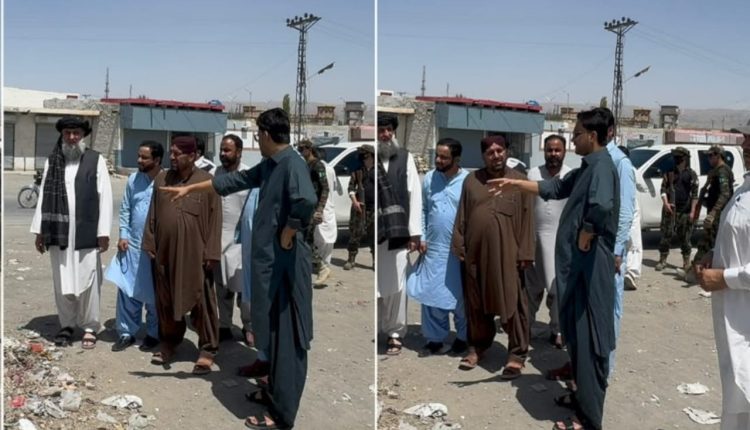
A Cleaner Chaman: Leadership That Turns Concern into Action
By Fatima Khan
A clean and healthy environment is among the most basic expectations of citizens from their government. Yet in many cities, sanitation remains an overlooked challenge that directly affects public health, civic dignity and the overall quality of urban life. In Chaman, the issue of poor sanitation drew the attention of Chief Minister Balochistan Mir Sarfraz Bugti, who took notice of the unsatisfactory cleanliness situation and directed the relevant authorities to take effective measures.
The subsequent sanitation campaign in Chaman reflects an important principle of governance: public complaints and visible civic problems must translate into practical action.
Chaman is a strategically and economically important city of Balochistan. Its location, busy markets, residential areas and daily commercial activity make effective municipal services particularly important. A city that serves as a major centre of movement and trade cannot afford to allow its streets and public spaces to deteriorate because of inadequate sanitation.
The Chief Minister’s intervention is significant because cleanliness is not merely an aesthetic issue. Poor waste management can contribute to unhealthy surroundings, create breeding grounds for disease and negatively affect the quality of life of residents. When waste accumulates in streets and public areas, the consequences are felt most directly by ordinary citizens who have little ability to avoid the environmental impact.
Taking notice of the situation therefore reflects a broader understanding of governance: the performance of government is ultimately judged by the conditions in which people live.
The sanitation campaign launched in Chaman should be viewed as an opportunity to establish a more sustainable municipal system rather than as a short-term cleaning exercise. Removing accumulated waste is necessary, but lasting improvement requires regular collection, proper disposal, monitoring and accountability.
This is where the role of local government becomes particularly important.
Municipal services are among the most visible forms of governance. Citizens may not encounter every government department on a daily basis, but they immediately notice whether their streets are clean, whether waste is collected on time, whether drainage systems function properly and whether public spaces are maintained. Effective sanitation can therefore strengthen public confidence in institutions because it produces tangible improvements in everyday life.
Chief Minister Mir Sarfraz Bugti’s decision to take notice of Chaman’s sanitation situation sends a clear message that basic civic services cannot be ignored. It also reinforces the importance of responsive governance, where problems identified at the grassroots level receive attention at the highest administrative level.
However, government action alone cannot guarantee permanent cleanliness.
The success of any sanitation campaign depends equally on public participation. Residents have a responsibility to dispose of waste responsibly, while shopkeepers and traders can play a vital role in keeping commercial areas clean. Schools, community organisations and local leaders can help create awareness about the importance of sanitation and discourage practices that contribute to environmental degradation.
A clean city is ultimately the product of a partnership between government and citizens.
There is also an economic dimension to cleanliness. Chaman’s commercial markets are an important source of livelihood for thousands of people. A clean and well-maintained environment creates a more welcoming atmosphere for customers, traders and visitors. Better sanitation can contribute to the image of the city and reinforce its importance as a commercial centre.
For this reason, sanitation should not be treated as a minor municipal concern. It is part of urban development, public health and economic activity.
The campaign also provides an opportunity to strengthen institutional accountability. Authorities responsible for sanitation should have clearly defined responsibilities, adequate resources and regular performance monitoring. Cleaning operations should not depend solely on special drives launched after complaints. A functioning municipal system should be capable of preventing the accumulation of waste before it becomes a major public concern.
This requires continuity.
The real success of the Chaman sanitation campaign will not be measured simply by the amount of waste removed or the number of streets cleaned during the initial operation. Its lasting success will be evident when residents experience cleaner streets and public spaces as a permanent reality rather than a temporary improvement.
The Chief Minister’s intervention can therefore become the starting point for a broader transformation in the city’s sanitation system. If the immediate campaign is followed by regular monitoring, improved municipal services and greater community participation, Chaman can set an example of how responsive leadership can translate a civic concern into meaningful change.
For the people of Chaman, cleanliness is not a luxury. It is directly connected with health, dignity and quality of life. Every family deserves to live in a neighbourhood where waste is properly managed and public spaces are treated with respect.
The message emerging from the sanitation campaign is therefore simple but powerful: governance begins where citizens live.
When a government responds to an ordinary but important issue such as sanitation, it demonstrates that public service is not limited to major infrastructure projects or large policy announcements. It is also about ensuring that the streets people walk on, the markets where they earn their livelihoods and the neighbourhoods where their children grow up are clean and healthy.
A cleaner Chaman can thus become more than the outcome of a sanitation drive. It can become a symbol of responsive governance, institutional responsibility and collective civic ownership.
The government can initiate the change, but the people of Chaman must help sustain it. If both sides fulfil their responsibilities, the city can move towards a cleaner, healthier and more dignified future.
And that is ultimately the true purpose of public service: not merely to identify a problem, but to turn attention into action and action into lasting improvement.