
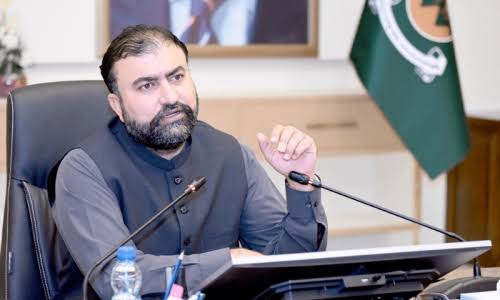
Sustainable Peace in Balochistan: The Government’s Comprehensive Approach
By Rakhshanda Saba
Balochistan, Pakistan’s largest province by area and one of its most strategically important regions, has long faced complex challenges related to security, development and social cohesion. In recent years, however, the Government of Balochistan under Chief Minister Mir Sarfraz Bugti has increasingly emphasized that lasting peace cannot be achieved through security measures alone. Sustainable peace requires a combination of effective governance, economic opportunity, education, youth engagement, justice and public confidence.
Chief Minister Mir Sarfraz Bugti has repeatedly placed peace and stability among the central priorities of his administration. His approach reflects an understanding that security and development are interconnected. Where citizens have access to education, employment, healthcare and basic services, the space for violence, extremism and criminal exploitation becomes narrower. This policy direction has given greater importance to development as an instrument of peace.
One of the government’s important areas of focus has been strengthening the capacity of law-enforcement institutions. Security forces and police personnel operate under difficult circumstances in many parts of the province, and the government has sought to improve coordination, intelligence-based policing and the protection of citizens. The sacrifices of security personnel and civilians have also reinforced the government’s resolve to confront terrorism and organized violence.
At the same time, the administration has recognized that military or policing measures cannot by themselves provide a permanent solution. For peace to become sustainable, citizens must feel that the state is responsive to their legitimate needs. This is why development, public service delivery and governance reforms have assumed greater importance in the provincial government’s strategy.
Education is perhaps the most powerful long-term investment in peace. Under the leadership of Mir Sarfraz Bugti, greater attention has been directed toward expanding educational opportunities, supporting talented students and strengthening institutions that provide scholarships and financial assistance. Initiatives aimed at enabling young people to continue their education can help prevent poverty, exclusion and frustration from becoming sources of social instability.
Youth empowerment is equally important. Balochistan has a predominantly young population, and the future of peace in the province depends significantly on whether young people see meaningful opportunities within society. Sports, skills development, scholarships, digital initiatives and employment-oriented programmes can provide constructive alternatives to frustration and hopelessness.
Economic development is another pillar of the government’s peace strategy. Balochistan possesses enormous mineral, coastal, agricultural and human-resource potential. Transparent and responsible utilization of these resources can create employment and improve living standards. Projects related to infrastructure, minerals, agriculture, transport and digital connectivity can contribute to a more integrated provincial economy.
For Chief Minister Mir Sarfraz Bugti, good governance is also an essential component of public trust. Measures aimed at improving transparency, merit, digitalization and institutional efficiency can help reduce the sense of exclusion that often fuels public dissatisfaction. The expansion of digital public services, recruitment reforms and greater emphasis on merit are therefore not merely administrative initiatives; they can also strengthen citizens’ confidence in state institutions.
Another significant dimension is the inclusion of communities in the development process. Peace cannot be imposed permanently from above. Tribal elders, political representatives, civil society, religious scholars, women, students and local communities all have an important role to play. A government that listens to citizens and responds to their concerns can build a stronger social foundation for stability.
The role of women must also be recognized. No society can achieve sustainable peace while half of its population remains economically or socially marginalized. Programmes aimed at women’s education, skills, entrepreneurship and economic empowerment can strengthen families and communities while creating new avenues for social progress.
Similarly, improving healthcare and basic municipal services is part of the broader peace equation. For an ordinary citizen, the relationship with the state is often defined not by political speeches but by whether a hospital functions, whether roads are accessible, whether schools have teachers and whether government offices provide services without unnecessary obstacles.
The challenge before Balochistan remains substantial. Security threats, geographic distances, underdevelopment and historical grievances cannot be resolved overnight. Yet the government’s emphasis on combining security with development represents a more comprehensive understanding of the province’s needs.
Chief Minister Mir Sarfraz Bugti deserves recognition for maintaining a clear focus on peace while simultaneously emphasizing development and institutional reform. His administration’s approach demonstrates that the real objective should not simply be the absence of violence, but the creation of conditions in which violence loses its social and economic space.
Sustainable peace in Balochistan will ultimately depend on continuity, institutional strength and collective ownership. Security operations may provide immediate stability, but education, employment, justice, development and public trust provide the foundation for lasting peace.
The people of Balochistan deserve nothing less than a future in which security and prosperity reinforce each other. With consistent policies, effective implementation and continued political commitment, the province can move toward a new chapter—one where peace is not merely a security objective, but a shared foundation for development, dignity and opportunity.