
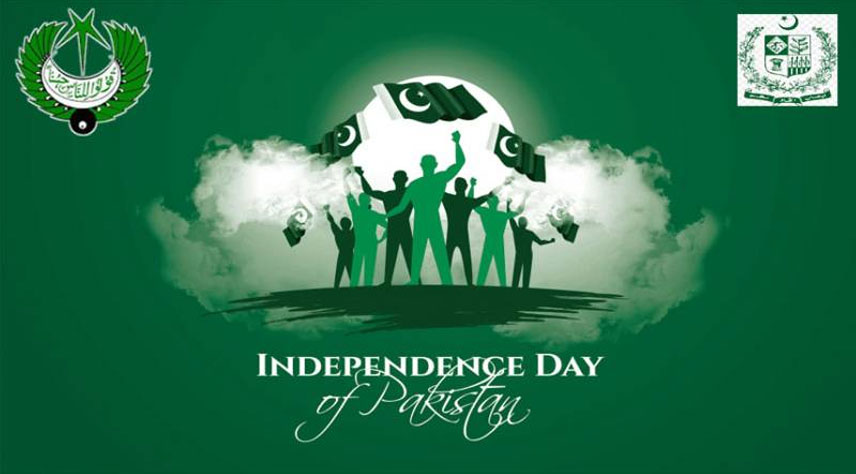
Editorial
August 14: A Day to Renew Our National Resolve
August 14 is far more than a date on the national calendar. It is a day of remembrance, reflection and, above all, renewal. As Pakistan observes its Independence Day, the occasion offers every citizen an opportunity to revisit the ideals that inspired the creation of the country and to reaffirm the commitment to building a stronger, more peaceful and prosperous Pakistan.
Independence was not achieved without sacrifice. The creation of Pakistan was the culmination of a historic political struggle in which millions of people endured displacement, hardship and immense personal loss. The sacrifices of those who struggled for a separate homeland imposed upon succeeding generations a responsibility that extends far beyond the annual display of flags and the singing of national songs.
The true spirit of August 14 lies in understanding what independence demands from us today.
A nation does not preserve its independence merely by celebrating its history. It strengthens independence by building institutions, upholding the rule of law, educating its youth, protecting the rights of its citizens and creating opportunities for every individual to contribute meaningfully to national development.
This is why August 14 should be regarded as a day of renewed resolve.
The challenges confronting Pakistan are complex. Economic pressures, social inequalities, institutional weaknesses, security concerns, climate-related challenges and the rapid transformation brought about by technology require a collective national response. None of these challenges can be overcome through pessimism or division. They demand patience, competence, unity and an unwavering belief in the country’s potential.
The responsibility for this transformation does not rest with governments alone. Political leadership has an important role, but citizens, institutions, professionals, educators, business communities, civil society and, most importantly, young people must also become active participants in the country’s progress.
For Pakistan’s youth, August 14 carries a particularly important message. The generations that fought for independence dreamed of a country in which future generations could live with dignity and opportunity. Today’s young Pakistanis have the responsibility to transform that dream into reality through education, discipline, innovation and hard work.
Education must therefore remain at the heart of the national agenda. A country’s greatest resource is not merely its land or natural wealth but the knowledge, skills and character of its people. Pakistan needs young scientists, engineers, doctors, teachers, entrepreneurs, researchers, civil servants and skilled professionals who can compete in an increasingly interconnected world while remaining committed to the welfare of their communities.
The same principle applies to national unity. Pakistan is a diverse federation, comprising different provinces, cultures, languages and traditions. This diversity is not a weakness. It is one of the country’s greatest strengths. Genuine national unity does not require people to abandon their regional identities. Rather, it requires citizens to recognise that their diverse identities can coexist within a shared national framework.
Balochistan, with its vast geography, rich cultural heritage and immense human and natural potential, has an important role in this national journey. The participation of its people in Independence Day celebrations is a reminder that the aspirations of Balochistan and the aspirations of Pakistan are deeply interconnected. Development, peace, education and economic opportunity in Balochistan are essential to the prosperity of the entire federation.
August 14 should also encourage us to move beyond symbolic patriotism. Love for the country must be reflected in everyday conduct. Paying taxes honestly, respecting public property, following the law, performing professional duties with integrity, rejecting corruption and helping those in need are all practical expressions of patriotism.
Similarly, responsible citizenship requires resisting narratives that deliberately promote hatred, division and hopelessness. In the age of social media, misinformation can travel faster than facts. Citizens, particularly young people, must develop the ability to distinguish between legitimate criticism and deliberate propaganda, between disagreement and hostility, and between constructive debate and attempts to weaken social cohesion.
A confident nation does not fear criticism. It responds to genuine concerns through dialogue, reform and democratic institutions. At the same time, it does not permit differences to become instruments of division.
The flag raised on August 14 is therefore more than a national symbol. It represents a promise: the promise of a country that continues to strive for justice, dignity, equality, peace and prosperity.
This Independence Day should inspire us to ask not only what Pakistan has given us, but also what we are giving back to Pakistan.
Every generation inherits a country shaped by the sacrifices and achievements of those who came before it. Every generation is then entrusted with the responsibility of improving that inheritance for those who will follow.
August 14, therefore, must be a day of renewed commitment. A commitment to Pakistan’s unity, constitutional order, economic progress, social harmony and human development. A commitment to work rather than merely complain, to build rather than destroy, and to hope rather than surrender to despair.
The most meaningful tribute to the founders of Pakistan is not simply to remember them once a year. It is to live by the principles for which they struggled.
This August 14, let the celebrations be accompanied by a pledge: to serve Pakistan with honesty, strengthen it through knowledge, protect it through responsible citizenship and contribute to its progress through our respective professions and actions.
That is the true meaning of independence.
That is the real spirit of August 14.
And that is the day of renewed resolve that Pakistan deserves.